
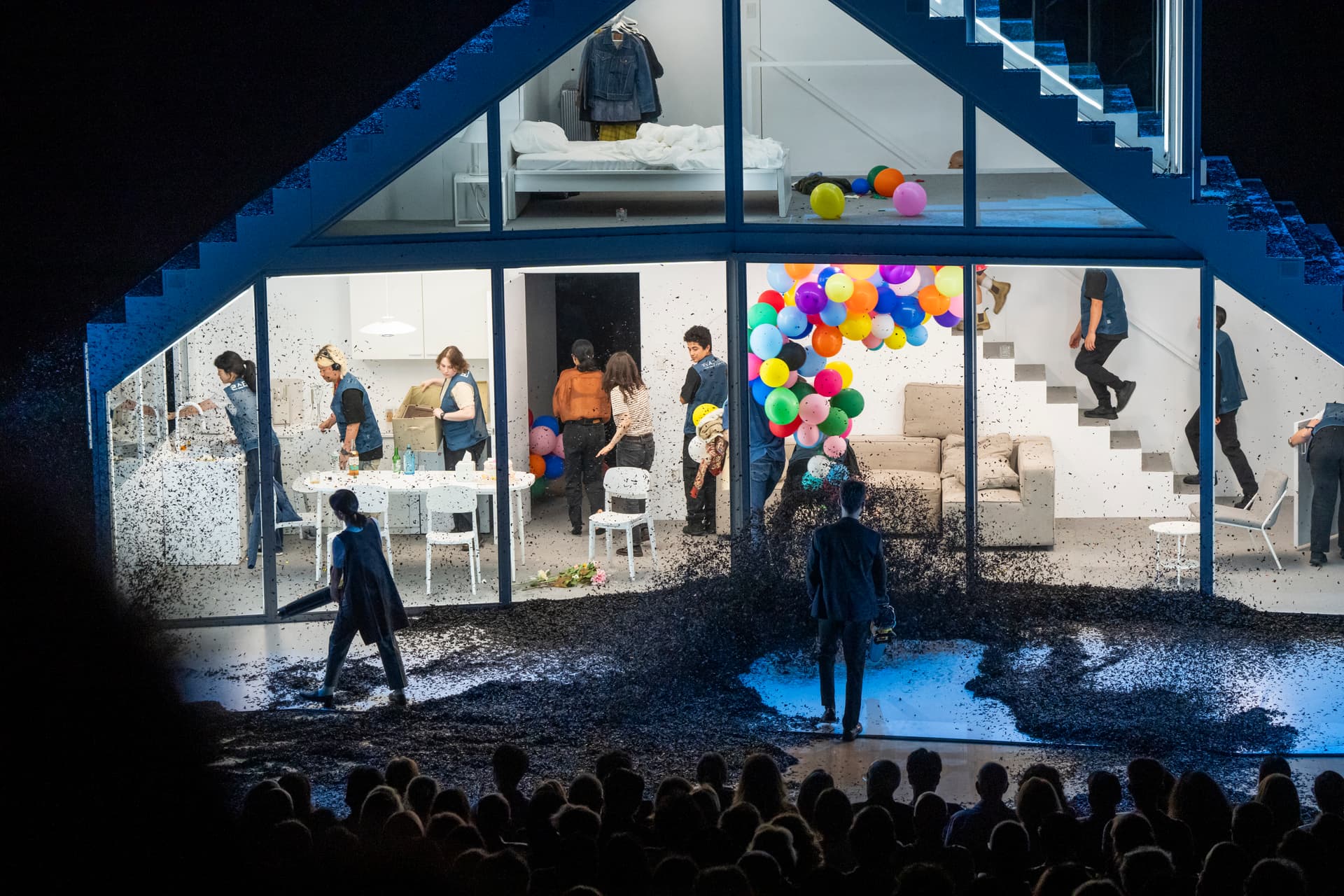
Chekhov’s ‘Cherry Orchard’ Blooms in Korean
By ELYSA GARDNER
|This article is from the archive of The New York Sun before the launch of its new website in 2022. The Sun has neither altered nor updated such articles but will seek to correct any errors, mis-categorizations or other problems introduced during transfer.

Published:
Updated:
Alessandra Sanguinetti’s exhibition “The Life that Came,” currently at the Yossi Milo Gallery, is a continuation of a prior body of work, “The Adventures of Guille and Belinda and the Enigmatic Meaning of their Dreams.” For many years now, Ms. Sanguinetti, a Magnum photographer who divides her time between New York and Argentina, has been photographing Guillermina and Belinda, two cousins, as they grow up on their family’s farm in Maipu, a rural backwater 300 kilometers from Buenos Aires. Of the two cousins, Belinda is the pretty one, and Guille is the fat one, if a young girl can be called “fat” and not described with a euphemism.
By ELYSA GARDNER
|
By LUKE FUNK
|
By JOSEPH CURL
|
By JOSEPH CURL
|
By MARTIN PENGELLY
|
By DONALD KIRK
|
By MATTHEW RICE
|
By JAMES BROOKE
|Alessandra Sanguinetti’s exhibition “The Life that Came,” currently at the Yossi Milo Gallery, is a continuation of a prior body of work, “The Adventures of Guille and Belinda and the Enigmatic Meaning of their Dreams.” For many years now, Ms. Sanguinetti, a Magnum photographer who divides her time between New York and Argentina, has been photographing Guillermina and Belinda, two cousins, as they grow up on their family’s farm in Maipu, a rural backwater 300 kilometers from Buenos Aires. Of the two cousins, Belinda is the pretty one, and Guille is the fat one, if a young girl can be called “fat” and not described with a euphemism.
Already have a subscription? Sign in to continue reading
Cancel anytime
By continuing you agree to our Privacy Policy and Terms of Service.
Cancel anytime