


An American Political Earthquake Could Emerge From This Under-the-Radar Race in Indiana
By GEORGE WILL
|The English playwright James Shirley had a kind of genius of correctness of form and content in an era that would not be recreated by Restoration drama.
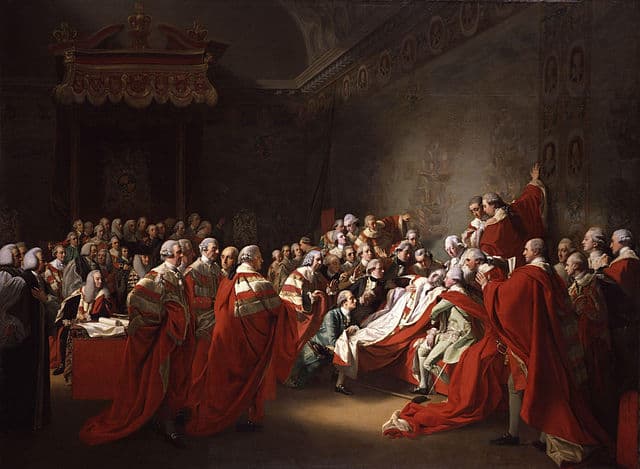
The English playwright James Shirley (1596–1666) was the last of Shakespeare’s line — the last of the literary figures who had flourished before the English Civil War and the Restoration. Few of his plays are still performed, which is a shame, for he had a kind of genius of correctness of form and content in an era that would not be recreated by Restoration drama. What does remain is “The Glories of Our Blood and State,” a poetic passage from Shirley’s masque, “The Contention of Ajax and Ulysses for the Armour of Achilles” (1659). Still sometimes performed as a hymn for state funerals, the poem consists of three eight-line stanzas, rhymed ababccdd, of tetrameter verse, with the fifth and six lines trimmed to dimeter for effect. The theme is a common one in the era: Pomp and power are vanities; death claims even kings and nobles. But rarely has the theme been done as well — as correctly and as concisely — as Shirley managed.
By GEORGE WILL
|
By MICHAEL BARONE
|
By ALEXANDER LARMAN
|
By ROSS ANDERSON
|
By DAVID JONES
|
By JOSEPH CURL
|
By GARY GASTELU
|
By JOSEPH CURL
|The English playwright James Shirley (1596–1666) was the last of Shakespeare’s line — the last of the literary figures who had flourished before the English Civil War and the Restoration. Few of his plays are still performed, which is a shame, for he had a kind of genius of correctness of form and content in an era that would not be recreated by Restoration drama. What does remain is “The Glories of Our Blood and State,” a poetic passage from Shirley’s masque, “The Contention of Ajax and Ulysses for the Armour of Achilles” (1659). Still sometimes performed as a hymn for state funerals, the poem consists of three eight-line stanzas, rhymed ababccdd, of tetrameter verse, with the fifth and six lines trimmed to dimeter for effect. The theme is a common one in the era: Pomp and power are vanities; death claims even kings and nobles. But rarely has the theme been done as well — as correctly and as concisely — as Shirley managed.
Already have a subscription? Sign in to continue reading
Cancel anytime
By continuing you agree to our Privacy Policy and Terms of Service.
Cancel anytime