

The Epistolary and Doomed Mary Queen of Scots Is Subject of a Revelatory Biography

Was Mary the victim of Queen Elizabeth’s dynastic ambitions or the perfidious plotter not only against the English queen but against the English church and the liberties of its populace?
Via Pegasus Books
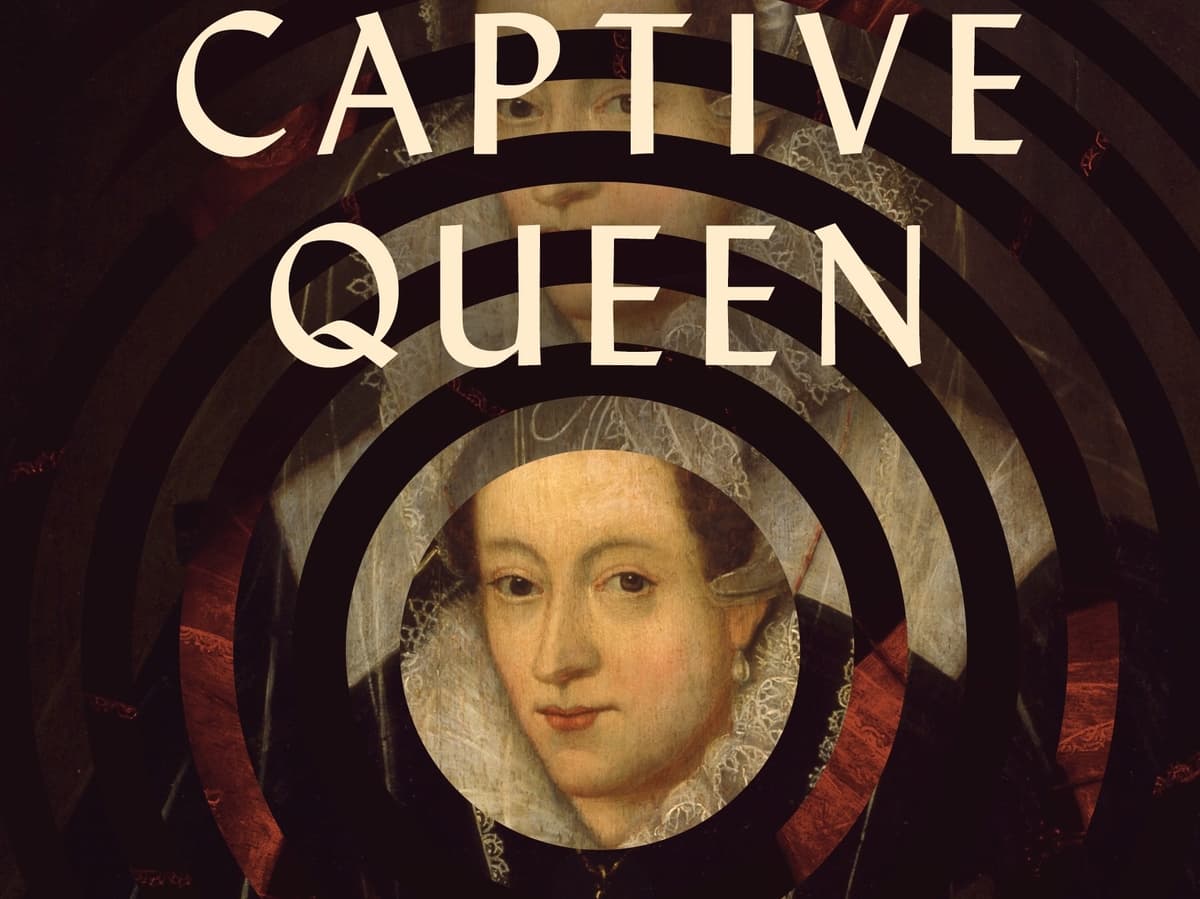
Cover of 'Captive Queen,' detail. Via Pegasus Books

‘Captive Queen: The Decrypted History of Mary, Queen of Scots’
By Jade Scott
Pegasus Books, 304 Pages

Mary Stuart, Mary I of Scotland, daughter of James V of Scotland and claimant to the English throne, Queen Consort of Francis, the French Dauphin, spent two decades as a Catholic refugee from the Scottish Reformation. She sought the protection of Queen Elizabeth, ever hopeful that her sister monarch would come to her rescue. Then, in despair, Mary became involved in failed plots to overthrow Elizabeth that eventuated in Mary’s execution on February 8, 1587.

Jade Scott concentrates on those two decades over which historians and biographers have debated. Was Mary the victim of Elizabeth’s dynastic ambitions or the perfidious plotter not only against the English queen but against the English church and the liberties of its populace? Complicating the arguments over these two monarchs are concerns over the authenticity of Mary’s letters in a time when forgeries were rampant, and ciphered correspondence subject to different interpretations — especially when the originals of some messages were lost or destroyed.

Ms. Scott has the benefit of many newly deciphered letters that provide a nuanced and textured depiction of an exile whose view of her detention gradually shifted as she came to realize that England had become not her haven but her prison. Her resort to ciphers reflected her distrust of her captors, who made the conditions of her confinement more restrictive even as she made strenuous efforts to ally herself with the French and the Spanish, who at various times expressed an interest in liberating her and replacing Elizabeth with Mary as the Catholic monarch of England. 

What Mary intended, up to now, has been occluded because of the nature of letters as a form of communication. Ms. Scott explains how letters were tampered with and what elaborate techniques were used to seal messages so as to prevent their opening. Mary sometimes wrote in her own hand, sometimes assembled notes that her attendants transcribed into letter form, and sometimes did her own ciphering. For much of her incarceration, she was careful not to directly involve herself in plots to rescue her, preserving her deniability.

What Ms. Scott is able to now definitely establish is that in the last year or so of her life, a frustrated Mary countenanced plots to overthrow and even assassinate Elizabeth. Ms. Scott is sympathetic to Mary, acknowledging she abandoned the idea of ever winning over Elizabeth, especially after her hope of perhaps returning to Scotland to reign with her son, James VI, brought up a Protestant, seemed not to interest him. Up to a point, Mary had been willing to compromise, to acknowledge the Reformation even as she remained a loyal Catholic. That option, however, seemed no longer obtainable as Mary neared what would be the last years of her life. 

Mary was hemmed in — not only by her captivity, but by her son’s unwillingness to help secure her freedom, and by Elizabeth’s increasing reluctance to provide Mary with any way out of her predicament. While reluctant to execute fellow monarch Mary, Elizabeth eventually concluded that holding on to Mary was just too risky, as plots against her by the French and the Spanish never seemed to cease.

Ms. Scott tells a gripping story, including all the ingenious ways Mary’s letters could be concealed by couriers working on her behalf. Yet much of Mary’s correspondence was intercepted, and Elizabeth’s security detail was adept at getting her attendants and messengers to serve as double agents, especially when they were shown how persuasive torture instruments like the rack could be. 

Mary has her nemesis in this riveting account of her futile prison escape plots: spymaster Francis Walsingham, secretary to Elizabeth I, expert not only at ferreting out Mary’s confederates but also in a persistent campaign to drive Elizabeth to the point of conviction that Mary had to go; it was no longer feasible simply to contain her. 

Mary was, in effect, writing an epistolary novel about her struggle to maintain her dignity and what she considered her rightful position in the world. Ms. Scott is able to get quite close to her subject because of the newly deciphered correspondence, and that sometimes leads to a bit of scene-setting and intimate thoughts that transgress the boundaries of fact and verge into fiction. 

Mr. Rollyson is the editor of “British Biography: A Reader.”


The New York Sun

© 2026 The New York Sun Company, LLC. All rights reserved.

Use of this site constitutes acceptance of our Terms of Use and Privacy Policy. The material on this site is protected by copyright law and may not be reproduced, distributed, transmitted, cached or otherwise used.

The New York Sun

Sign in or  create a free account

or
By continuing you agree to our Privacy Policy and Terms of Use