
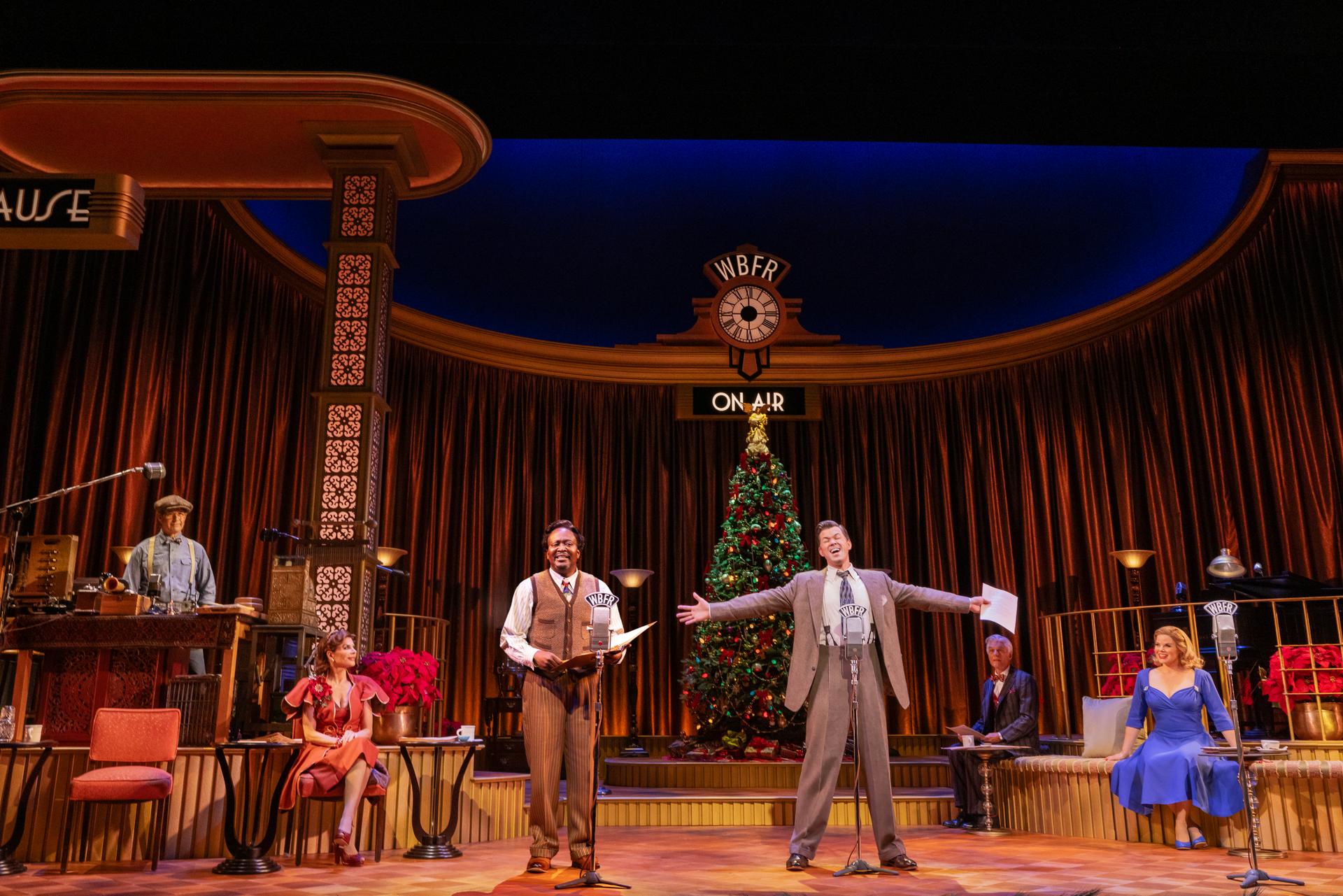
Broadway’s ‘It’s a Wonderful Life’ Is Festive, but Its Magic Is Muted
By ELYSA GARDNER
|This article is from the archive of The New York Sun before the launch of its new website in 2022. The Sun has neither altered nor updated such articles but will seek to correct any errors, mis-categorizations or other problems introduced during transfer.

Published:
Updated:
Delivering a magisterial account of Franklin Roosevelt’s and Dwight Eisenhower’s roles in World War II, situated within their separate lives and presidencies, may seem an outright impossibility in the space of 100 pages. Yet it is what Philip Terzian has done in Architects of Power: Roosevelt, Eisenhower, and the American Century. This brief volume will probably do more to correct current misperceptions than anything since Roosevelt became simply the polio victim who launched the New Deal, and Eisenhower the reluctant, anti-war soldier who inveighed against the military-industrial complex on his way out of office.
By ELYSA GARDNER
|
By REBECCA SUGAR
|
By BRADLEY CORTRIGHT
|
By A.R. HOFFMAN
|
By JENNIFER DOHERTY
|
By MATTHEW RICE
|
By HOWARD HUSOCK
|
By ELYSA GARDNER
|Delivering a magisterial account of Franklin Roosevelt’s and Dwight Eisenhower’s roles in World War II, situated within their separate lives and presidencies, may seem an outright impossibility in the space of 100 pages. Yet it is what Philip Terzian has done in Architects of Power: Roosevelt, Eisenhower, and the American Century. This brief volume will probably do more to correct current misperceptions than anything since Roosevelt became simply the polio victim who launched the New Deal, and Eisenhower the reluctant, anti-war soldier who inveighed against the military-industrial complex on his way out of office.
Already have a subscription? Sign in to continue reading
Cancel anytime
By continuing you agree to our Privacy Policy and Terms of Service.
Cancel anytime