
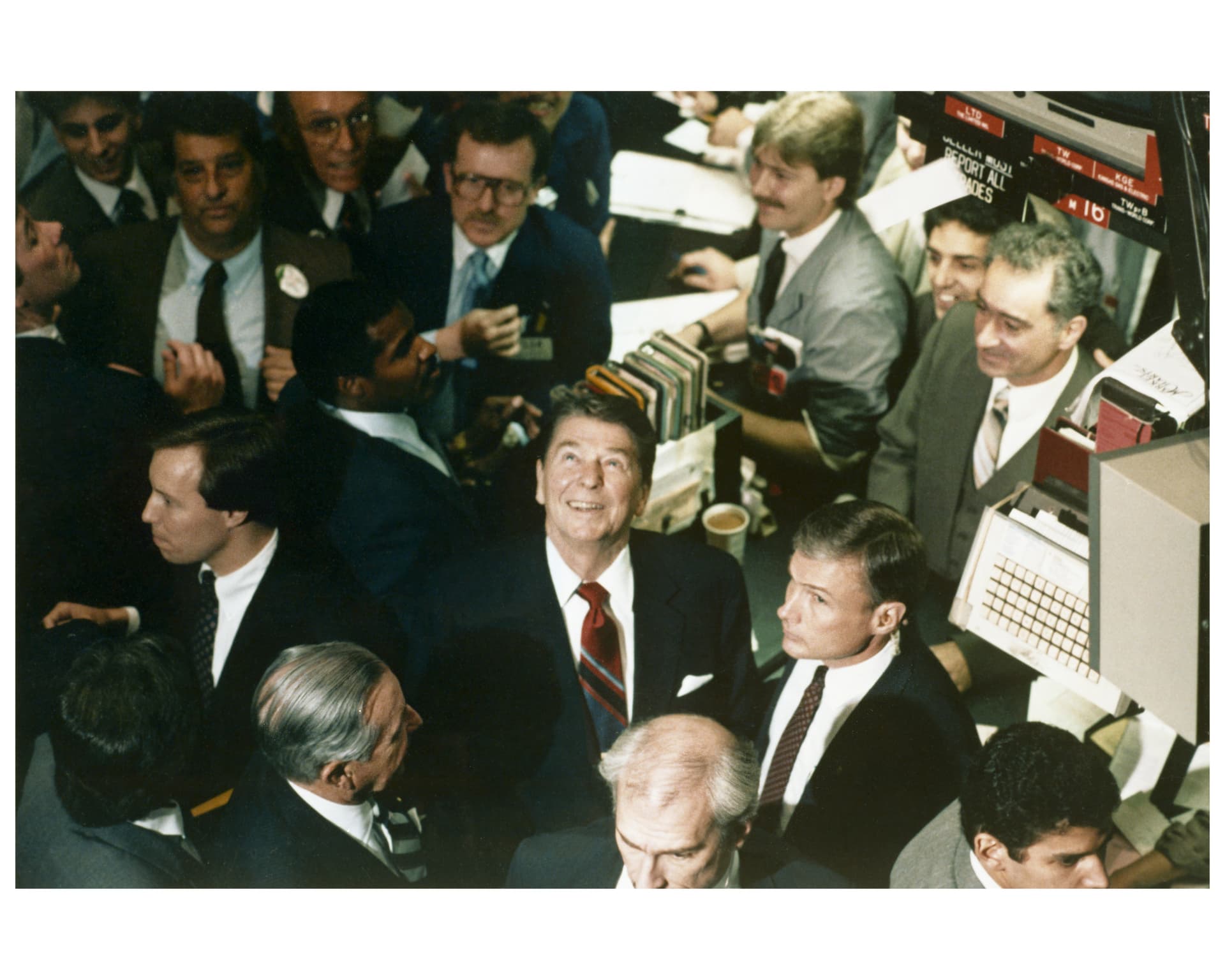
The Long Hangover of the Roaring Eighties
By TOM DEIGNAN
|This article is from the archive of The New York Sun before the launch of its new website in 2022. The Sun has neither altered nor updated such articles but will seek to correct any errors, mis-categorizations or other problems introduced during transfer.

Published:
Updated:
It has to be hard on filmmakers when their movie gets beaten to the multiplex by its own parody, as happened when “The Incredibles,” an animated film clearly derived in large part from the “Fantastic Four” comic books, hit theaters some eight months before the more faithful, live-action adaptation. What has to be harder still is when the straight version fails to measure up to the satire not only in terms of humor but in narrative cohesion, emotional depth, and visual imagination. It’s as if “Austin Powers” had opened a year before “Dr. No,” and Mike Myers had turned out to be not only funnier than Sean Connery but tougher and more sexually magnetic as well.
By TOM DEIGNAN
|
By SHARON KEHNEMUI
|
By MATTHEW RICE
|
By CARL ROLLYSON
|
By SHARON KEHNEMUI
|
By JEFFREY WELLS
|
By SHARON KEHNEMUI
|
By JOSEPH CURL
|It has to be hard on filmmakers when their movie gets beaten to the multiplex by its own parody, as happened when “The Incredibles,” an animated film clearly derived in large part from the “Fantastic Four” comic books, hit theaters some eight months before the more faithful, live-action adaptation. What has to be harder still is when the straight version fails to measure up to the satire not only in terms of humor but in narrative cohesion, emotional depth, and visual imagination. It’s as if “Austin Powers” had opened a year before “Dr. No,” and Mike Myers had turned out to be not only funnier than Sean Connery but tougher and more sexually magnetic as well.
Already have a subscription? Sign in to continue reading
Cancel anytime
By continuing you agree to our Privacy Policy and Terms of Service.
Cancel anytime