

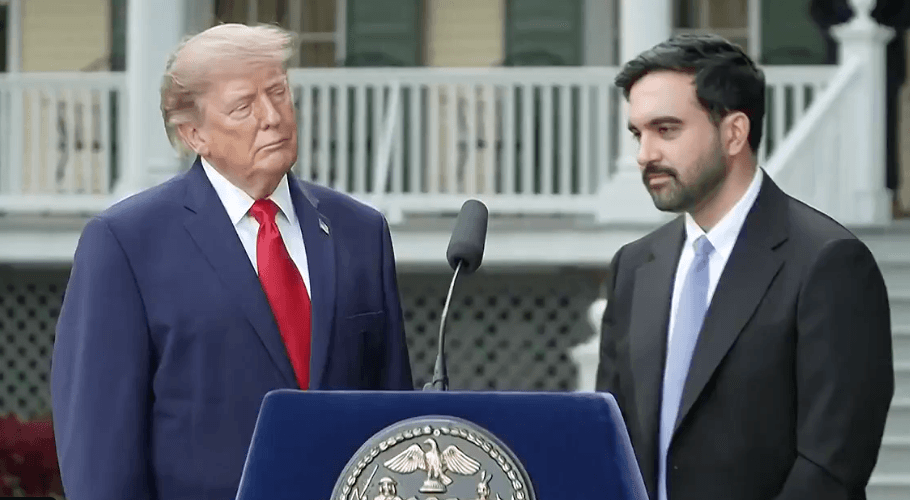
Maurene Comey Says Trump Fired Her for ‘Her DNA’ and for Being a ‘Thought Criminal’
By A.R. HOFFMAN
|This article is from the archive of The New York Sun before the launch of its new website in 2022. The Sun has neither altered nor updated such articles but will seek to correct any errors, mis-categorizations or other problems introduced during transfer.

Published:
Updated:
Out in the remotest regions of mathematics, far from the bustling and long-populated center, out where this great thriving empire adjoins the windswept badlands of philosophy, is the topic called Foundations. Here mathematicians use the techniques of their discipline to inquire into the nature of that discipline itself, into the very fundamentals of math: number, set, proof, and contradiction. The ideas that underlie Foundations can be traced back to Leibniz and Descartes, but as a coherent subject of study it is quite new, having properly begun only with the work of Giuseppe Peano in the 1890s.
By A.R. HOFFMAN
|
By JAMES BROOKE
|
By MATTHEW RICE
|
By BRADLEY CORTRIGHT
|
By DANIEL McCARTHY
|
By CONRAD BLACK
|
By WILL FRIEDWALD
|
By MATTHEW RICE
|Out in the remotest regions of mathematics, far from the bustling and long-populated center, out where this great thriving empire adjoins the windswept badlands of philosophy, is the topic called Foundations. Here mathematicians use the techniques of their discipline to inquire into the nature of that discipline itself, into the very fundamentals of math: number, set, proof, and contradiction. The ideas that underlie Foundations can be traced back to Leibniz and Descartes, but as a coherent subject of study it is quite new, having properly begun only with the work of Giuseppe Peano in the 1890s.
Already have a subscription? Sign in to continue reading
Cancel anytime
By continuing you agree to our Privacy Policy and Terms of Service.
Cancel anytime