
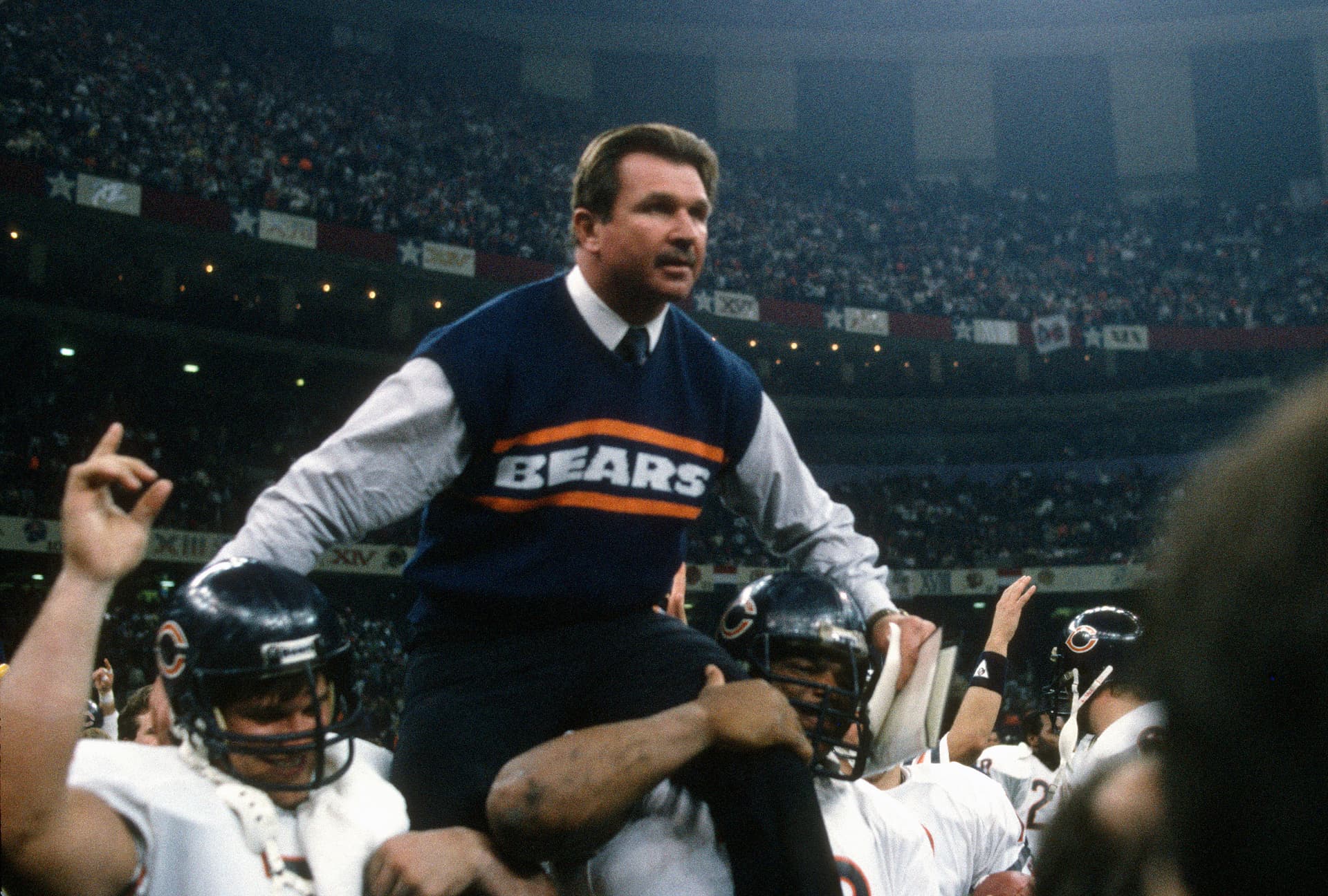
The Gridiron Crusader: How Mike Ditka Transformed Chicago Football and American Politics
By GEORGE WILLIS
|This article is from the archive of The New York Sun before the launch of its new website in 2022. The Sun has neither altered nor updated such articles but will seek to correct any errors, mis-categorizations or other problems introduced during transfer.

Published:
Updated:
Twelve years ago, a gaggle of experimental directors working at Richard Foreman’s Ontological-Hysteric Theater asked choreographer Annie-B Parson to conduct a choreography workshop for non-dancers. Ms. Parson, the Bessie, Obie, and Guggenheim Fellowship–winning co-director of Big Dance Theater, had trained several waves of rising directors and performers at New York University’s Experimental Theatre Wing. But very few people outside of the program had ever seen her teach. That long ago workshop, in which she taught the likes of Sophie Haviland, Ken Nintzel, and the then unknown Richard Maxwell, was a blip.
By GEORGE WILLIS
|
By JOSEPH CURL
|
By MICHAEL BARONE
|
By LENORE SKENAZY
|
By JOSEPH CURL
|
By JOSEPH CURL
|
By DAVID JONES
|
By ROSS ANDERSON
|Twelve years ago, a gaggle of experimental directors working at Richard Foreman’s Ontological-Hysteric Theater asked choreographer Annie-B Parson to conduct a choreography workshop for non-dancers. Ms. Parson, the Bessie, Obie, and Guggenheim Fellowship–winning co-director of Big Dance Theater, had trained several waves of rising directors and performers at New York University’s Experimental Theatre Wing. But very few people outside of the program had ever seen her teach. That long ago workshop, in which she taught the likes of Sophie Haviland, Ken Nintzel, and the then unknown Richard Maxwell, was a blip.
Already have a subscription? Sign in to continue reading
Cancel anytime
By continuing you agree to our Privacy Policy and Terms of Service.
Cancel anytime