
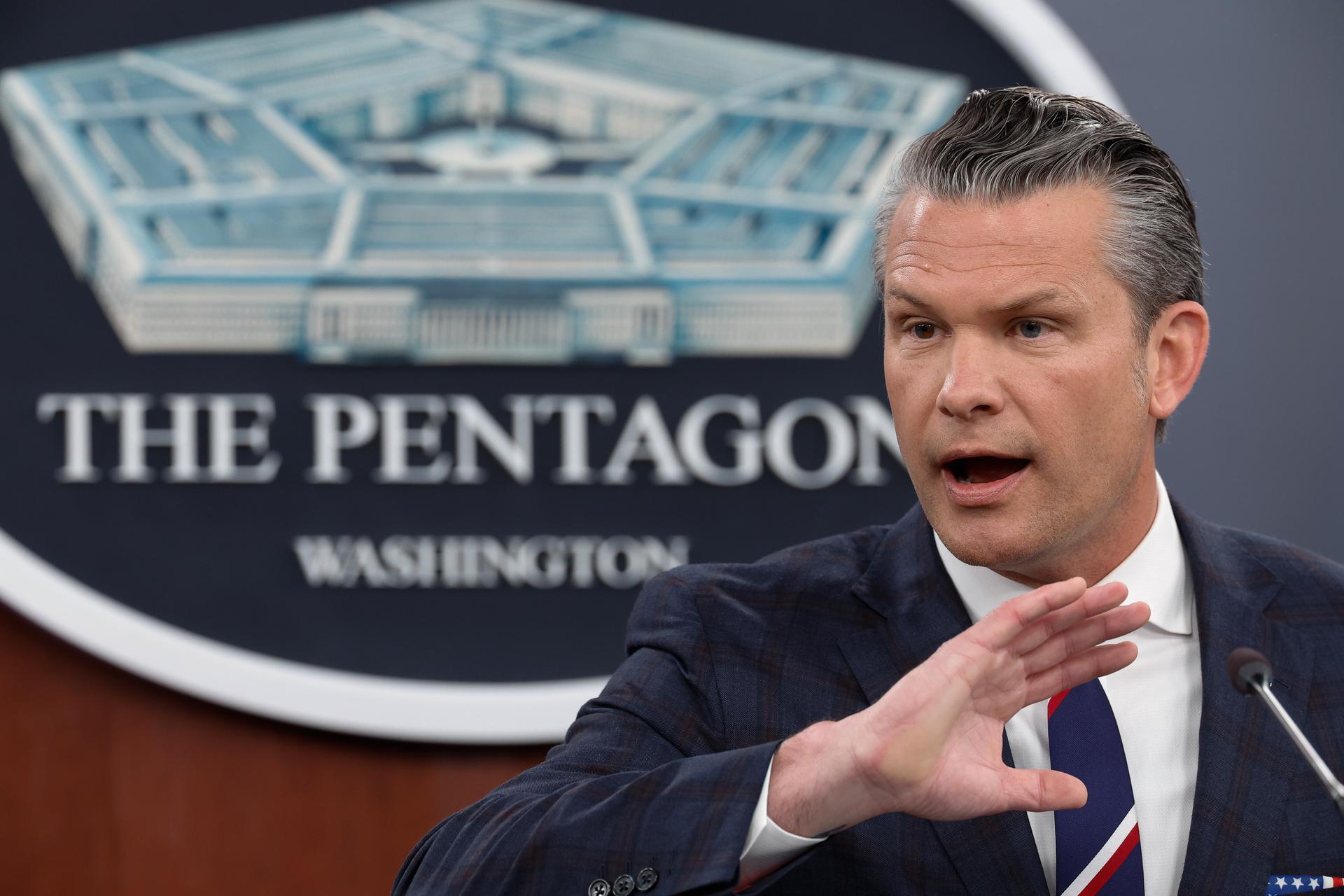
Hegseth Survives Impeachment Attempt After Republicans Vote To Kill Massie’s Articles
By MATTHEW RICE
|This article is from the archive of The New York Sun before the launch of its new website in 2022. The Sun has neither altered nor updated such articles but will seek to correct any errors, mis-categorizations or other problems introduced during transfer.

Published:
Updated:
When President Reagan described the Soviet Union in 1983 as “an evil empire,” he was widely denounced as a warmonger. The British historian Eric Hobsbawm, whose bestselling history of the 20th century, “Age of Extremes,” has become a standard text on many campuses, reckoned that in the “Second Cold War” that began in 1979 when the Russians invaded Afghanistan, American democracy was “more dangerous” than Soviet totalitarianism. “The hysteria in Washington was not, of course, based on realistic reasoning…. There was absolutely no evidence, or likelihood, that the USSR wanted a war…let alone that it was planning a military attack on the West. The feverish scenarios of nuclear attack which came from the mobilized Western cold warriors and government publicity in the early 1980s were self-generated,” he wrote. Historians of the 21st century, he predicted, “remote from the living memories of the 1970s and 1980s, will puzzle over the apparent insanity of this outburst of military fever….”
By MATTHEW RICE
|
By A.R. HOFFMAN
|
By SETH LIPSKY
|
By THE NEW YORK SUN
|
By LAWRENCE KUDLOW
|
By BRADLEY CORTRIGHT
|
By THE NEW YORK SUN
|
By JENNIFER DOHERTY
|When President Reagan described the Soviet Union in 1983 as “an evil empire,” he was widely denounced as a warmonger. The British historian Eric Hobsbawm, whose bestselling history of the 20th century, “Age of Extremes,” has become a standard text on many campuses, reckoned that in the “Second Cold War” that began in 1979 when the Russians invaded Afghanistan, American democracy was “more dangerous” than Soviet totalitarianism. “The hysteria in Washington was not, of course, based on realistic reasoning…. There was absolutely no evidence, or likelihood, that the USSR wanted a war…let alone that it was planning a military attack on the West. The feverish scenarios of nuclear attack which came from the mobilized Western cold warriors and government publicity in the early 1980s were self-generated,” he wrote. Historians of the 21st century, he predicted, “remote from the living memories of the 1970s and 1980s, will puzzle over the apparent insanity of this outburst of military fever….”
Already have a subscription? Sign in to continue reading
Cancel anytime
By continuing you agree to our Privacy Policy and Terms of Service.
Cancel anytime