Federal Reserve’s Independence Emerges as Culprit in the ‘Unaffordability’ of Housing

Home prices are now 77 percent above their peak in the housing bubble of the early 2000s.
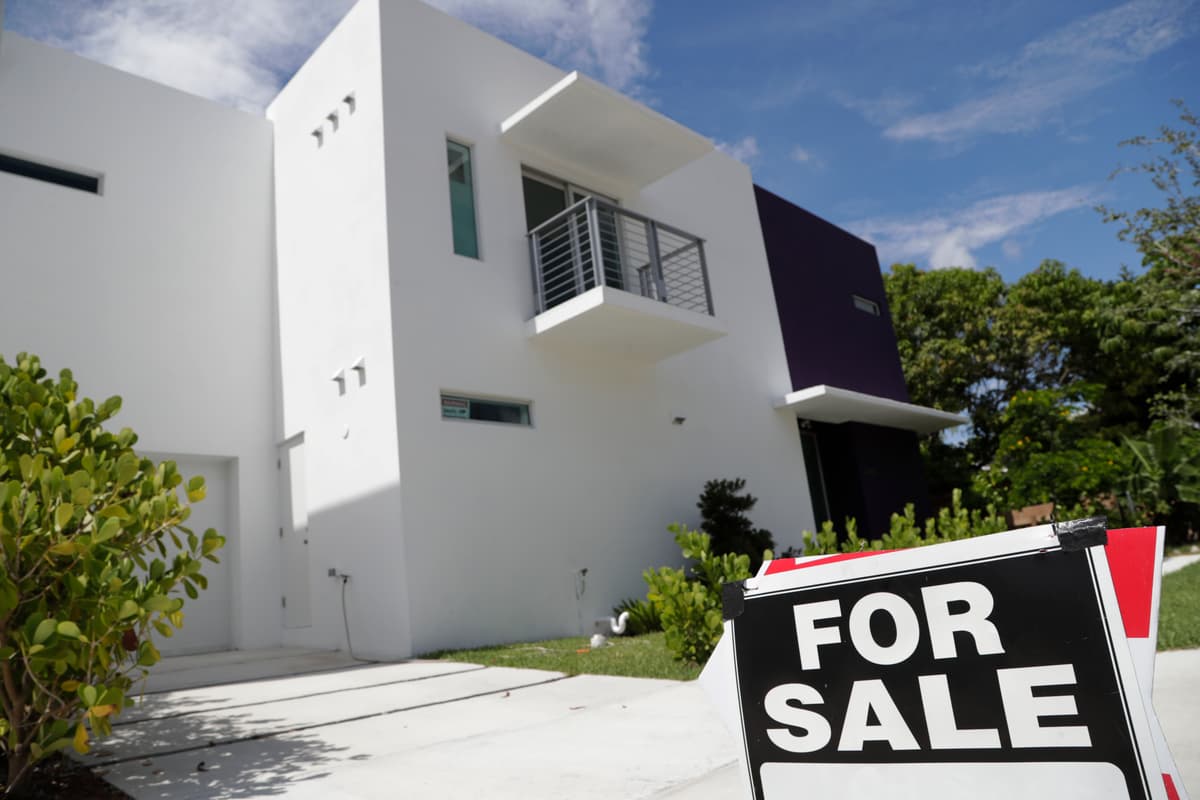
AP/Lynne Sladky
America is having its second housing bubble of the 21st century, courtesy of the Federal Reserve. AP/Lynne Sladky

America appears to be at the top of its second house price bubble of the first quarter of the 21st century. House prices are now 77 percent above their 2007 peak in the housing bubble of the early 2000s, according to the S&P CoreLogic Case-Shiller National House Price Index. 

This second inflation of American house prices in the still-youthful century was stoked by the unprecedented and unjustifiable buying of mortgages by the Federal Reserve. The central bank purchased mortgage assets for the first time in its history in 2008, as an emergency intervention while the first bubble was collapsing.

The Fed assured Congress that such buying would be temporary, would be reversed, and would not affect the longer-run size of its balance sheet. Instead, the Fed’s mortgage expansion continued until 2022 — for 14 years. Along the way, it forced 30-year fixed mortgage interest rates to abnormally low and unsustainable levels of below 3 percent.

The Fed’s mortgage portfolio, an asset it historically had never owned, reached the staggering level of $2.7 trillion. This was three times as big as the whole Fed had been in 2007, as the Federal Reserve turned its balance sheet into the equivalent of the world’s biggest savings and loan.

As of December 2025, the mortgage portfolio is still huge at over $2 trillion; it had a remarkable mark-to-market loss of $323 billion as of the last report on September 30. The Fed’s former promises to the Congress of reversing the investment notwithstanding, the Fed cannot sell its huge mortgage portfolio without realizing market value losses and pushing mortgage interest rates higher.

The current bubble is widely considered a housing affordability crisis, since large numbers of people, especially young families and other first-time buyers, cannot afford houses at the now historically normal level of U.S. mortgage interest rates. “We’ve probably made housing unaffordable for a whole generation of Americans,” said the chief executive, Sean Bobson, of a real estate company, the Amherst Group.

Amherst Group’s analysis finds that if we keep mortgage lending rates and household income at their current levels, to reach the affordability of 2019, U.S. house prices would have to fall 35 percent. The “‘Affordability Crisis’ Can’t Be Solved,” a Wall Street Journal headline proclaimed. On the contrary, though, it can: House prices can fall. The whole point of prices is that they can go down as well as up. 

When the Fed stopped increasing the size of its mortgage portfolio in 2022, United States mortgage interest rates quickly rose to historically common levels of between 6 percent and 7 percent. Many observers, including me, were surprised that this doubling of the interest cost of buying a house did not cause a sustained, significant fall in average house prices but national house price indices continued an upward trend. 

However, the volume of house purchases shrank dramatically, to the lowest levels in three decades. So the increasing prices were on a much reduced volume of transactions. The rate at which house prices were rising has slowed steadily in 2025. Now the AEI Housing Center projects the year-over-year national house price increase to fall to zero in December for the full year 2025.

Since U.S. inflation is running at 3 percent, if nominal house prices are flat, in real terms they are declining at a rate of 3 percent. The Housing Policy Council has calculated the deviation of U.S. house prices from their long-term, inflation-adjusted trend line. As of the third quarter of 2025, it concludes, house prices were 30.8 percent higher than their long-term trend.

This is similar to the first quarter of 2007, at the top of the first 21st century bubble, when house prices were 29.5 percent higher than the trend. What happened next, that time, was that American house prices fell by a total of 27 percent, dropping until 2012. Where do home prices go this time? It seems to me that the direction is unavoidably down. By how much? I don’t know and neither does anybody else. 

The repeated housing bubble shows yet again what a bad idea is Federal Reserve “independence.” Who approved the Fed’s plunge into mortgages which inflated a new bubble? Who approved the consequent risk to the Fed’s own finances, which resulted in tens of billions of losses to the Fed, the Treasury, and the taxpayers?

No one. No part of the government, especially one with the power to make such costly mistakes, should ever operate as a law unto itself. It is high time for this to be made clear by the Congress, which is the creator and overseer of the Federal Reserve.


The New York Sun

© 2025 The New York Sun Company, LLC. All rights reserved.

Use of this site constitutes acceptance of our Terms of Use and Privacy Policy. The material on this site is protected by copyright law and may not be reproduced, distributed, transmitted, cached or otherwise used.

The New York Sun

Sign in or  create a free account

or
By continuing you agree to our Privacy Policy and Terms of Use