

The Gridiron Crusader: How Mike Ditka Transformed Chicago Football and American Politics
By GEORGE WILLIS
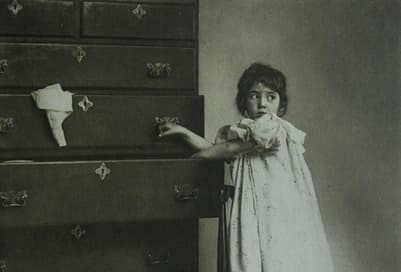
|The story of a household where all the family’s mishaps are blamed on an unseen Mr. Nobody.

Published:
Updated:
For one of the lighter verses we offer as Poem of the Day on Wednesdays, how about this bit of 19th-century American verse, “Mr. Nobody”?
The poem gained its first real foothold when it appeared as by an unnamed author in The Golden Book of Poetry, a popular 1947 anthology edited by the children’s author Jane Werner Watson (1915–2004). “Mr. Nobody” is sometimes oddly ascribed to Walter de la Mare (1873–1956), but the researcher Rebecca Perkins traces its first publication to the Riverside Magazine for Young People in 1868. An editorial error left it out of the table of contents, and though it also appeared that same year in a collection called “Little Lou’s Sayings and Doings” by Elizabeth Prentiss (1818–1878), the ascription to Anonymous, rather than Prentiss, became the default.
Prentiss’s light verse — eight-line stanzas in ballad meter, alternating three- and four-foot lines — tells the story of a household where all the family’s mishaps are blamed on an unseen Mr. Nobody.
By GEORGE WILLIS
|
By JOSEPH CURL
|
By MICHAEL BARONE
|
By LENORE SKENAZY
|
By JOSEPH CURL
|
By JOSEPH CURL
|
By DAVID JONES
|
By ROSS ANDERSON
|For one of the lighter verses we offer as Poem of the Day on Wednesdays, how about this bit of 19th-century American verse, “Mr. Nobody”?
The poem gained its first real foothold when it appeared as by an unnamed author in The Golden Book of Poetry, a popular 1947 anthology edited by the children’s author Jane Werner Watson (1915–2004). “Mr. Nobody” is sometimes oddly ascribed to Walter de la Mare (1873–1956), but the researcher Rebecca Perkins traces its first publication to the Riverside Magazine for Young People in 1868. An editorial error left it out of the table of contents, and though it also appeared that same year in a collection called “Little Lou’s Sayings and Doings” by Elizabeth Prentiss (1818–1878), the ascription to Anonymous, rather than Prentiss, became the default.
Prentiss’s light verse — eight-line stanzas in ballad meter, alternating three- and four-foot lines — tells the story of a household where all the family’s mishaps are blamed on an unseen Mr. Nobody.
Already have a subscription? Sign in to continue reading
Cancel anytime
By continuing you agree to our Privacy Policy and Terms of Service.
Cancel anytime