


The Left Tempts Trump
By THE NEW YORK SUN
|There is something premonitory about this poem, with its overt merging of winter imagery with that of decay and death.
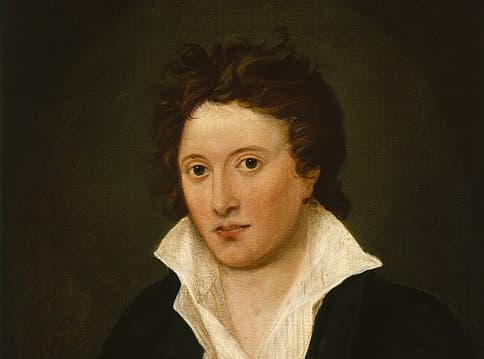
Percy Bysshe Shelley (1792–1822) made a life, albeit a short one, out of a radical and utterly destructive utopianism. He was a dedicated atheist and a vegetarian, a proponent of property held in common. He felt that lovers, like property, should also be held in common, rather than being bound by the unhappy privatization of marriage. Despite his principled opposition to the institution of matrimony, he eloped to Scotland in 1811 with the sixteen-year-old Harriet Westbrook. Three years later, in a revision of that revision of his original principle, he ran away to France with Mary Godwin, the daughter of his mentor, William Godwin. She was also sixteen at the time.
For the rest of his life, he and Mary bounced between England and various points on the continent. Their household, composed of the Shelleys and their various sexual liasons, operated on a principle of evasion: of creditors, chiefly, but also of disapproving relatives and friends. Shelley had hoped to retain custody of his two children by Harriet, but they were remanded into foster care on grounds of his adultery and atheism. Three of his four children with Mary died before the age of five. By 1822, the year of his death by incompetence (in a boating accident off the Italian coast) Shelley’s utopian vision — free life, free love — had become the nightmare hallucination it always was.
Today’s poem, Shelley’s “The Cold Earth Slept Below” first appeared in print in 1815. There is something premonitory about this poem, with its shifts from tetrameter to dimeter, its abccaab rhymes, and its overt merging of winter imagery with that of decay and death. The dead woman, frozen into the landscape, might prefigure his first wife Harriet, who committed suicide by drowning in 1816. She might prefigure Mary, who came to regard her existence with Shelley as a life-in-death. Or she might point, in ways that the man himself could not consciously have admitted, to a life vision doomed to destroy everything it touched.
By THE NEW YORK SUN
|
By MATTHEW RICE
|
By ROSS ANDERSON
|
By GEORGE WILLIS
|
By AIDAN MAGEE
|
By LUKE FUNK
|
By HOLLIE McKAY
|
By BRADLEY CORTRIGHT
|Percy Bysshe Shelley (1792–1822) made a life, albeit a short one, out of a radical and utterly destructive utopianism. He was a dedicated atheist and a vegetarian, a proponent of property held in common. He felt that lovers, like property, should also be held in common, rather than being bound by the unhappy privatization of marriage. Despite his principled opposition to the institution of matrimony, he eloped to Scotland in 1811 with the sixteen-year-old Harriet Westbrook. Three years later, in a revision of that revision of his original principle, he ran away to France with Mary Godwin, the daughter of his mentor, William Godwin. She was also sixteen at the time.
For the rest of his life, he and Mary bounced between England and various points on the continent. Their household, composed of the Shelleys and their various sexual liasons, operated on a principle of evasion: of creditors, chiefly, but also of disapproving relatives and friends. Shelley had hoped to retain custody of his two children by Harriet, but they were remanded into foster care on grounds of his adultery and atheism. Three of his four children with Mary died before the age of five. By 1822, the year of his death by incompetence (in a boating accident off the Italian coast) Shelley’s utopian vision — free life, free love — had become the nightmare hallucination it always was.
Today’s poem, Shelley’s “The Cold Earth Slept Below” first appeared in print in 1815. There is something premonitory about this poem, with its shifts from tetrameter to dimeter, its abccaab rhymes, and its overt merging of winter imagery with that of decay and death. The dead woman, frozen into the landscape, might prefigure his first wife Harriet, who committed suicide by drowning in 1816. She might prefigure Mary, who came to regard her existence with Shelley as a life-in-death. Or she might point, in ways that the man himself could not consciously have admitted, to a life vision doomed to destroy everything it touched.
Cancel anytime
By continuing you agree to our Privacy Policy and Terms of Service.
Cancel anytime