
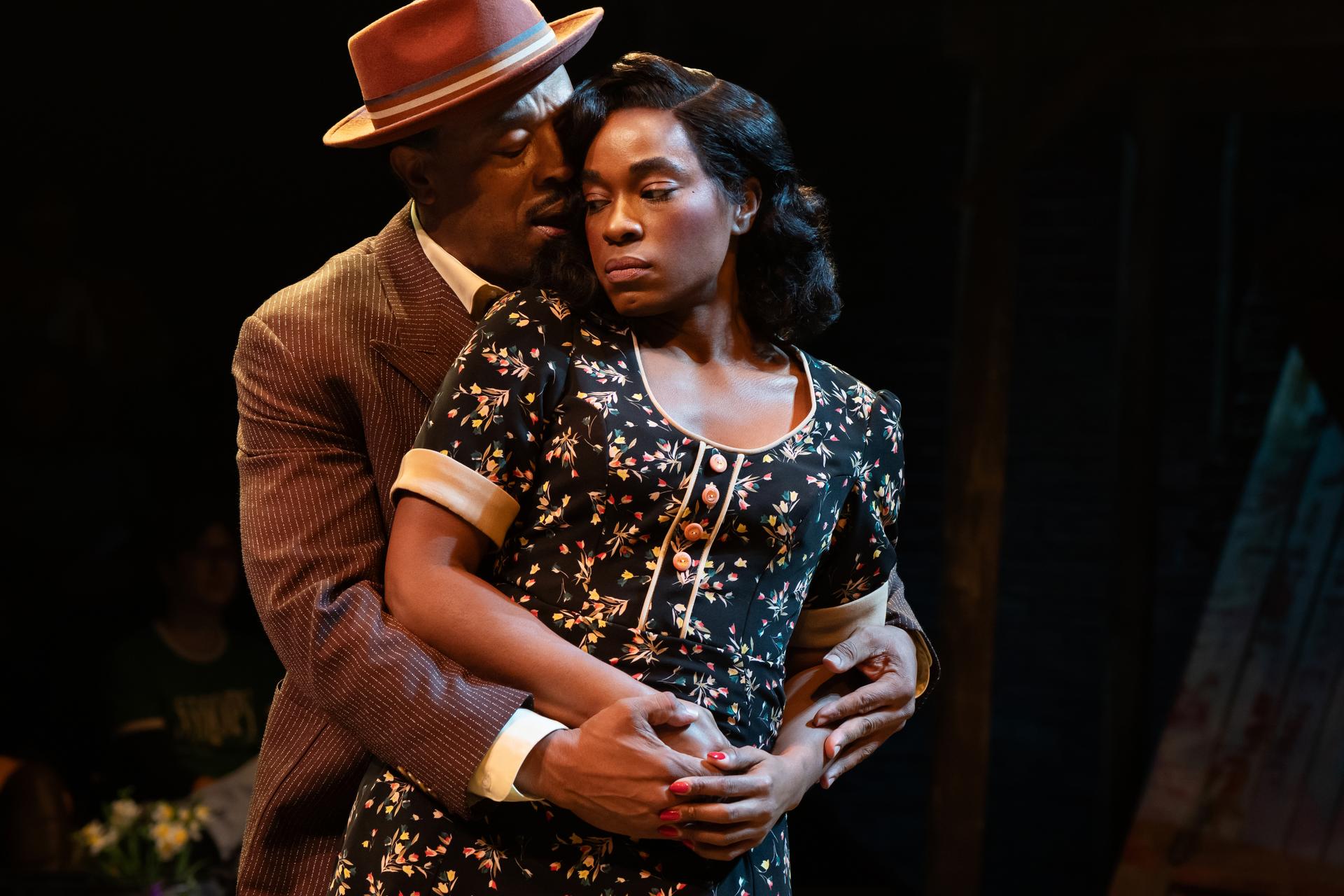
‘Seven Guitars’ Resounds With Poetry and Pain
By ELYSA GARDNER
|This article is from the archive of The New York Sun before the launch of its new website in 2022. The Sun has neither altered nor updated such articles but will seek to correct any errors, mis-categorizations or other problems introduced during transfer.

Published:
Updated:
Let’s begin with his full name and title: Don Luchino Visconti, Count of Modrone. Visconti wasn’t just an aristocrat; he was from one of the oldest aristocratic families in Europe. He was also, as most film fans know, a Marxist. This is often characterized as a stunning contradiction: Everyone from Visconti’s fellow Neorealist Roberto Rossellini (who hated his guts) to that great despiser of cinema, Gore Vidal, used it against him. The idea was that beneath the surface grandeur and left-wing fury lurked one of the great poseurs of the 20th century. The work, all of which is being shown in an impressive retrospective beginning this weekend at BAM, shows a filmmaker who, like his mentor, Jean Renoir, was intimate with the workings of human folly, which is as fully in evidence at the top of the economic and social ladder (“Senso”) as it is at the bottom (“Rocco and His Brothers,” “Ossessione”). It was this knowledge, along with his Olympian talents, that made him a genuinely great filmmaker.
By ELYSA GARDNER
|
By LUKE FUNK
|
By BENNY AVNI
|
By THE NEW YORK SUN
|
By THE NEW YORK SUN
|
By ALEX ZDAN
|
By THE NEW YORK SUN
|
By MATTHEW RICE
|Let’s begin with his full name and title: Don Luchino Visconti, Count of Modrone. Visconti wasn’t just an aristocrat; he was from one of the oldest aristocratic families in Europe. He was also, as most film fans know, a Marxist. This is often characterized as a stunning contradiction: Everyone from Visconti’s fellow Neorealist Roberto Rossellini (who hated his guts) to that great despiser of cinema, Gore Vidal, used it against him. The idea was that beneath the surface grandeur and left-wing fury lurked one of the great poseurs of the 20th century. The work, all of which is being shown in an impressive retrospective beginning this weekend at BAM, shows a filmmaker who, like his mentor, Jean Renoir, was intimate with the workings of human folly, which is as fully in evidence at the top of the economic and social ladder (“Senso”) as it is at the bottom (“Rocco and His Brothers,” “Ossessione”). It was this knowledge, along with his Olympian talents, that made him a genuinely great filmmaker.
Already have a subscription? Sign in to continue reading
Cancel anytime
By continuing you agree to our Privacy Policy and Terms of Service.
Cancel anytime