
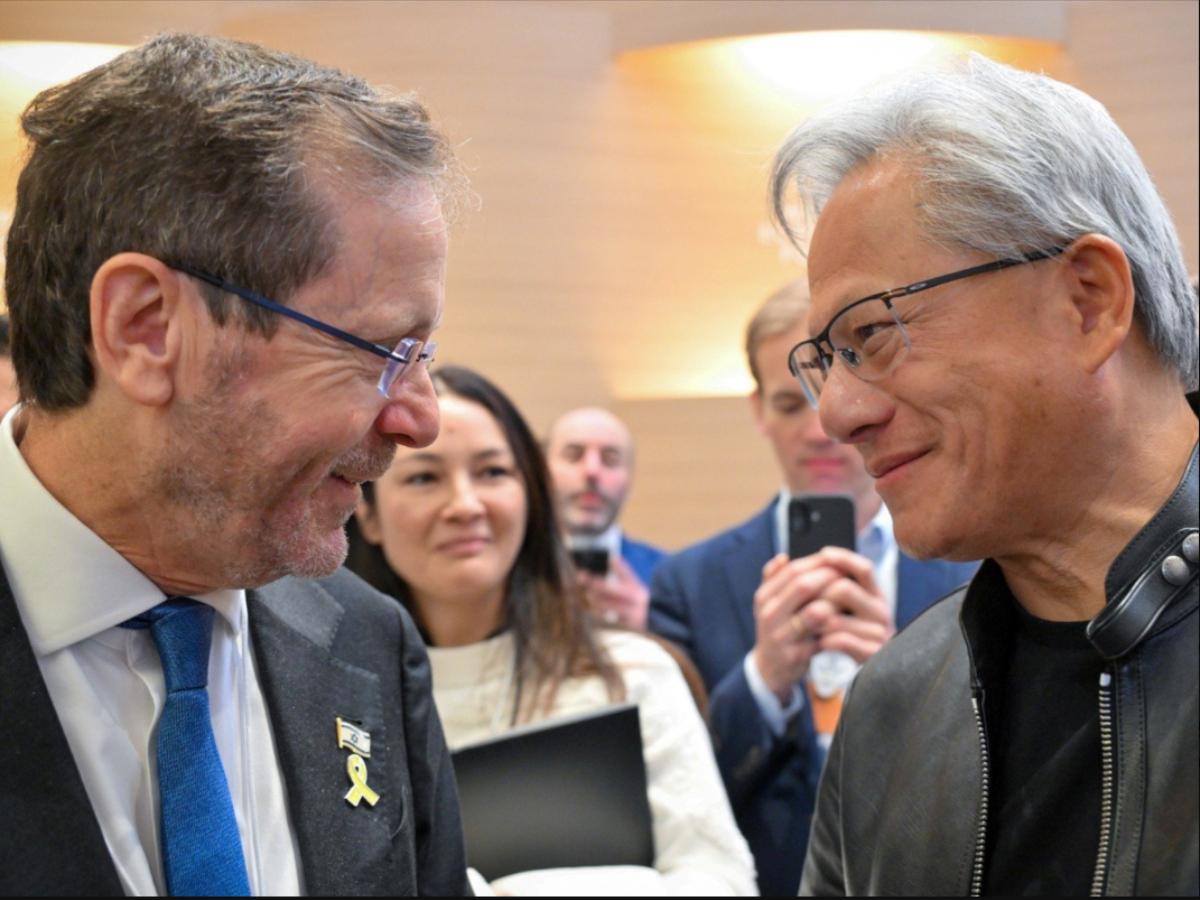
Huang’s Return to Nvidia ‘Good News’ for Israel, For Now
By LUKE FUNK
|This article is from the archive of The New York Sun before the launch of its new website in 2022. The Sun has neither altered nor updated such articles but will seek to correct any errors, mis-categorizations or other problems introduced during transfer.

Published:
Updated:
After decades of neglect at home and abroad, the Argentine art form of tango returned to the world stage in full force in the mid-1980s with the hugely successful show “Tango Argentino.” The show subsequently spawned a seemingly inexhaustible stream of tango performances, most of which can roughly be divided into two types: the tangospectacle, conceived for international audiences, usually as a touring show, and the tango concert, usually a local event, with local musicians, meant to showcase the interests and style of a particular composer or bandleader. Two recent programs, Pablo Aslan’s “Tango!” and Estampas Porteñas’ “Tango Fire” clearly illustrated these contrasting approaches.
By LUKE FUNK
|
By BENNY AVNI
|
By THE NEW YORK SUN
|
By THE NEW YORK SUN
|
By ALEX ZDAN
|
By THE NEW YORK SUN
|
By MATTHEW RICE
|
By ROSS ANDERSON
|After decades of neglect at home and abroad, the Argentine art form of tango returned to the world stage in full force in the mid-1980s with the hugely successful show “Tango Argentino.” The show subsequently spawned a seemingly inexhaustible stream of tango performances, most of which can roughly be divided into two types: the tangospectacle, conceived for international audiences, usually as a touring show, and the tango concert, usually a local event, with local musicians, meant to showcase the interests and style of a particular composer or bandleader. Two recent programs, Pablo Aslan’s “Tango!” and Estampas Porteñas’ “Tango Fire” clearly illustrated these contrasting approaches.
Already have a subscription? Sign in to continue reading
Cancel anytime
By continuing you agree to our Privacy Policy and Terms of Service.
Cancel anytime