
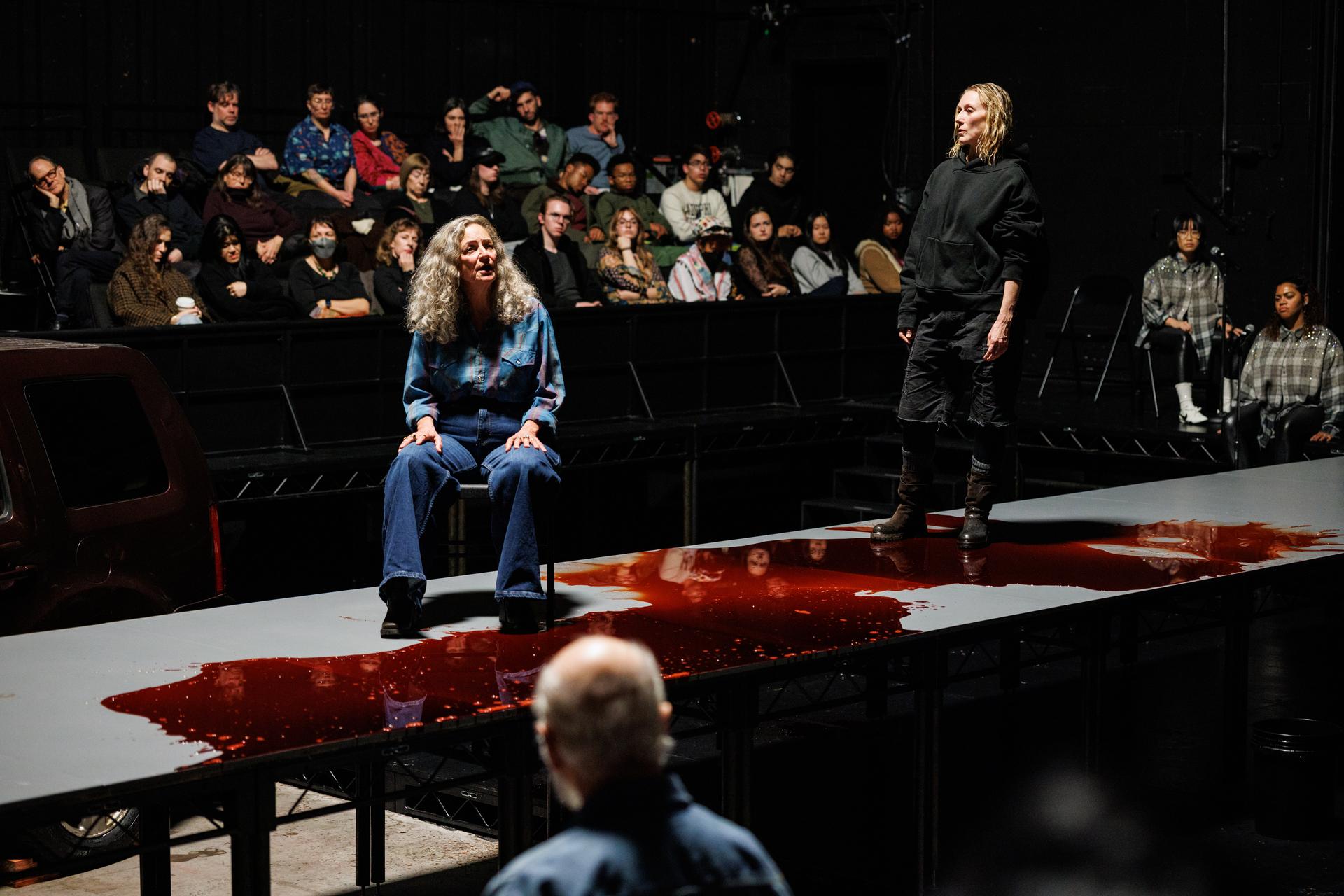
A Mystifying ‘Elektra’ for a Modern Age
By ELYSA GARDNER
|This article is from the archive of The New York Sun before the launch of its new website in 2022. The Sun has neither altered nor updated such articles but will seek to correct any errors, mis-categorizations or other problems introduced during transfer.

Published:
Updated:
John Betjeman, like suet pudding and the royal family, is one of those British phenomena whose charms have never really been appreciated on this side of the Atlantic. He is by far the most popular and beloved English poet of the postwar era — his “Collected Poems” have sold more than two and a half million copies — yet his name is virtually unknown here. In part this is because Betjeman managed to combine roles that simply do not go together in America: poet, broadcaster, preservationist, religious spokesman, and society figure. By the time he died, in 1984, he had become a national institution, in a way that no American poet since Robert Frost has come close to equaling. As A.N. Wilson writes, in his unabashedly admiring new biography, “Betjeman: A Life” (Farrar Straus and Giroux, 375 pages, $27), “at some visceral level he spoke for England. He did so more than any politician of his time, and more than any of the religious leaders either.”
By ELYSA GARDNER
|
By ALEXANDER LARMAN
|
By HOLLIE McKAY
|
By JOSEPH CURL
|
By DAVID JONES
|
By GEORGE WILLIS
|
By JOSEPH CURL
|
By A.R. HOFFMAN
|John Betjeman, like suet pudding and the royal family, is one of those British phenomena whose charms have never really been appreciated on this side of the Atlantic. He is by far the most popular and beloved English poet of the postwar era — his “Collected Poems” have sold more than two and a half million copies — yet his name is virtually unknown here. In part this is because Betjeman managed to combine roles that simply do not go together in America: poet, broadcaster, preservationist, religious spokesman, and society figure. By the time he died, in 1984, he had become a national institution, in a way that no American poet since Robert Frost has come close to equaling. As A.N. Wilson writes, in his unabashedly admiring new biography, “Betjeman: A Life” (Farrar Straus and Giroux, 375 pages, $27), “at some visceral level he spoke for England. He did so more than any politician of his time, and more than any of the religious leaders either.”
Already have a subscription? Sign in to continue reading
Cancel anytime
By continuing you agree to our Privacy Policy and Terms of Service.
Cancel anytime