
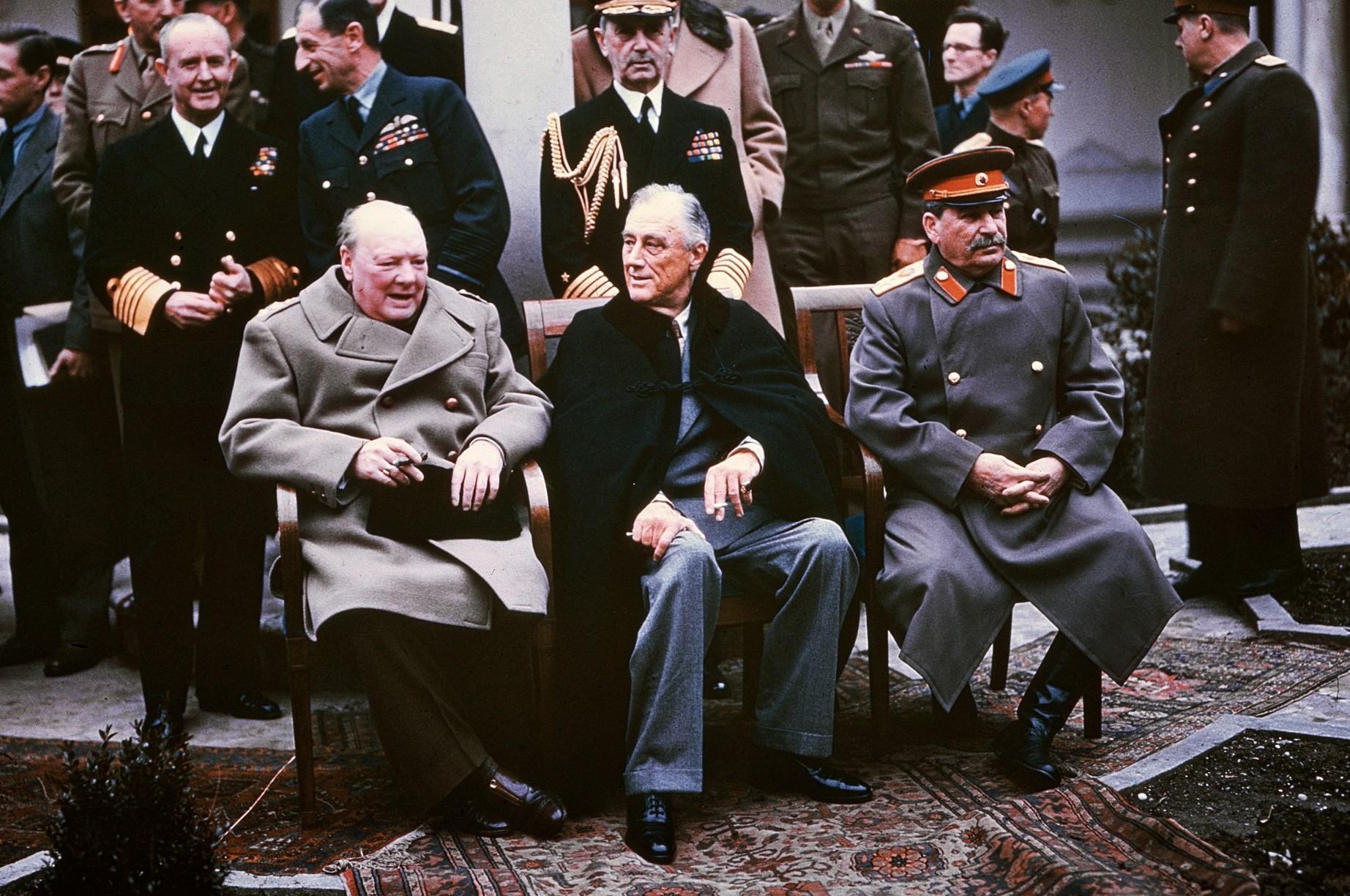
Yalta 2, and All That
By CONRAD BLACK
|This article is from the archive of The New York Sun before the launch of its new website in 2022. The Sun has neither altered nor updated such articles but will seek to correct any errors, mis-categorizations or other problems introduced during transfer.

Published:
Updated:
In discussions of the contemporary Middle East, few arguments have resonated more widely, or among a more diverse set of observers, than the claim that the Palestinian-Israeli conflict constitutes the source of all evil and that its resolution will lead to regional peace and stability. No sooner had the guns fallen silent on the Israel-Lebanon border than Prime Minister Tony Blair of Britain, fresh from his summer vacation in the Caribbean island of Barbados, announced his intention to embark on a mission to the Middle East next month in an attempt to both stabilize the situation in Lebanon and to resuscitate the stalled peace process between Israel and the Palestinians. This sense of urgency was echoed by the American former national security adviser, Zbigniew Brzezinski, who claimed that “Today, it’s becoming increasingly difficult to separate the Israeli-Palestinian problem, the Iraq problem and Iran from each other.” And the Jordanian commentator Rami Khouri put it in even stronger terms: “Every major tough issue in the Middle East is somehow linked to the consequences of the festering Israeli-Palestinian conflict… Its bitterness kept seeping out from its Palestine-Israel core to corrode many other dimensions of the region.”
By CONRAD BLACK
|
By THE NEW YORK SUN
|
By JAMES BROOKE
|
By MATTHEW RICE
|
By SHARON KEHNEMUI
|
By DANIEL McCARTHY
|
By VERONIQUE de RUGY
|
By ROSS ANDERSON
|In discussions of the contemporary Middle East, few arguments have resonated more widely, or among a more diverse set of observers, than the claim that the Palestinian-Israeli conflict constitutes the source of all evil and that its resolution will lead to regional peace and stability. No sooner had the guns fallen silent on the Israel-Lebanon border than Prime Minister Tony Blair of Britain, fresh from his summer vacation in the Caribbean island of Barbados, announced his intention to embark on a mission to the Middle East next month in an attempt to both stabilize the situation in Lebanon and to resuscitate the stalled peace process between Israel and the Palestinians. This sense of urgency was echoed by the American former national security adviser, Zbigniew Brzezinski, who claimed that “Today, it’s becoming increasingly difficult to separate the Israeli-Palestinian problem, the Iraq problem and Iran from each other.” And the Jordanian commentator Rami Khouri put it in even stronger terms: “Every major tough issue in the Middle East is somehow linked to the consequences of the festering Israeli-Palestinian conflict… Its bitterness kept seeping out from its Palestine-Israel core to corrode many other dimensions of the region.”
Already have a subscription? Sign in to continue reading
Cancel anytime
By continuing you agree to our Privacy Policy and Terms of Service.
Cancel anytime