


By All Means, Bust ‘Decoy Dan’ Dirty Tricks, but Remember the Foundational Battle Between Socialist Misery and Free Enterprise Prosperity
By LAWRENCE KUDLOW
|Henry Vaughan’s Christmas is Christmas morning, filled with sun and birdsong. Yet this pure, reflexive joy turns into something more somber and introspective.
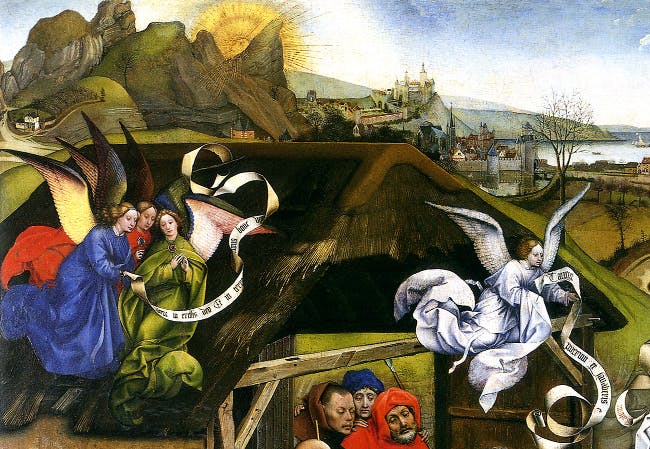
Today’s poem, “Christ’s Nativity,” illustrates the posthumous influence of the Anglican poet-divine George Herbert (1593–1633) on his Welsh disciple Henry Vaughan (1621–1695). Vaughan was only twelve when Herbert died. Despite some distant, tenuous family connection dating back to the Battle of Agincourt, the two never met. But in the late 1640s, reading Herbert’s poems, Vaughan experienced both a spiritual conversion and a clarification of his vocation as a poet. “A blessed man,” he wrote of Herbert, “whose holy life and verse gained many converts (of whom I am the least).”
By LAWRENCE KUDLOW
|
By LUKE FUNK
|
By BRADLEY CORTRIGHT
|
By THE NEW YORK SUN
|
By LUKE FUNK
|
By LUKE FUNK
|
By BRADLEY CORTRIGHT
|
By ELYSA GARDNER
|Today’s poem, “Christ’s Nativity,” illustrates the posthumous influence of the Anglican poet-divine George Herbert (1593–1633) on his Welsh disciple Henry Vaughan (1621–1695). Vaughan was only twelve when Herbert died. Despite some distant, tenuous family connection dating back to the Battle of Agincourt, the two never met. But in the late 1640s, reading Herbert’s poems, Vaughan experienced both a spiritual conversion and a clarification of his vocation as a poet. “A blessed man,” he wrote of Herbert, “whose holy life and verse gained many converts (of whom I am the least).”
Already have a subscription? Sign in to continue reading
Cancel anytime
By continuing you agree to our Privacy Policy and Terms of Service.
Cancel anytime