


Wynton Marsalis’s Homecoming Farewell
By WILL FRIEDWALD
|Emily Dickinson’s talent for letting a conceit unfold was at the level of the 17th-century Metaphysical Poets, and even in a light poem, she’s capable of taking the idea of March arriving like a visitor and letting it run.
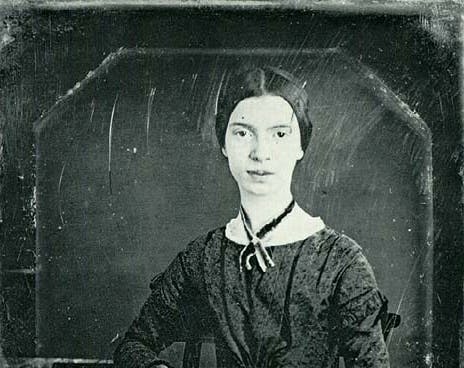
Today’s Poem of the Day — for the First of March — is from Emily Dickinson (1830–1886), and it’s one of her minor poems. Except, of course, that, being Emily Dickinson, she couldn’t just dash off a minor poem. Her talent for letting a conceit unfold was at the level of the 17th-century Metaphysical Poets, and even in a light poem, she’s capable of taking the idea of March arriving like a visitor and letting it run.
In almost a self-parody of her use of punctuation, the 26-line poem has 24 emdashes, with only one comma, one question mark, and no periods. The poem gestures toward her usual hymn or ballad meter, four-foot lines alternating with three-foot lines, and rhymed on the shorter lines.
By WILL FRIEDWALD
|
By MATTHEW RICE
|
By THE NEW YORK SUN
|
By LAWRENCE KUDLOW
|
By LUKE FUNK
|
By JOSEPH CURL
|
By BENNY AVNI
|
By MATTHEW RICE
|Today’s Poem of the Day — for the First of March — is from Emily Dickinson (1830–1886), and it’s one of her minor poems. Except, of course, that, being Emily Dickinson, she couldn’t just dash off a minor poem. Her talent for letting a conceit unfold was at the level of the 17th-century Metaphysical Poets, and even in a light poem, she’s capable of taking the idea of March arriving like a visitor and letting it run.
In almost a self-parody of her use of punctuation, the 26-line poem has 24 emdashes, with only one comma, one question mark, and no periods. The poem gestures toward her usual hymn or ballad meter, four-foot lines alternating with three-foot lines, and rhymed on the shorter lines.
Already have a subscription? Sign in to continue reading
Cancel anytime
By continuing you agree to our Privacy Policy and Terms of Service.
Cancel anytime