
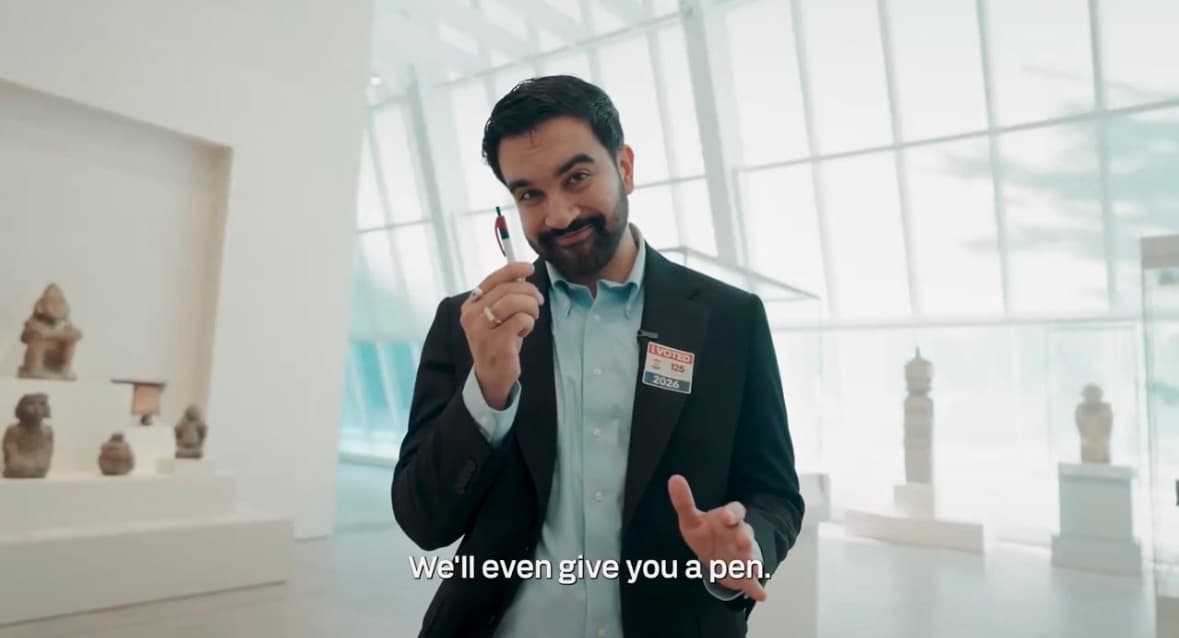
Mamdani Courts Voters With No-ID Pitch as GOP Sounds Alarm
By JENNIFER DOHERTY
|Myra Brooks Welch might look like a candidate for rediscovery in these days that personal characteristics of the artist are taken as somehow bearing upon the worth of the art.


Published:
Updated:
To be a critic — a good one, a serious person seriously thinking about how art works — requires a sympathy for the different modes of any particular art. The first genuine maturing of a critic, the first moment of adulthood, comes when we can fully recognize the greatness of a work of art in a form we detest. This is more than an ability to say, “Good art of its kind.” It’s an ability to say, “Good art, even though it makes me want to vomit.”
We could talk here of the failure of criticism in recent years to defend everything from such movies as “The Birth of a Nation” to such poems as Alexander Pope’s “The Rape of the Lock,” all subject to woke efforts at cancelling. The failure of critical sympathy, however, extends much further back. The rise of high modernism brought us such great poetic work as T.S. Eliot’s, but it also seemed to license a sneer at popular work in sentimental veins. And that’s a shame, for it allowed subsequent generations to forget what made poetry an art form for the masses. As poetry retreated into its little enclaves of the enlightened, its appreciators congratulated themselves on having fewer but better readers.
Bah. Take, as an example of what we lost, something like Myra Brooks Welch’s 1921 “The Touch of the Master’s Hand,” today’s Poem of the Day. No one should call this poetry of the highest kind, but it is not praised or much anthologized these days — simply because it starts with two strikes against it: It was popular, and its themes are religious.
Myra Brooks Welch (1877–1959) might look like a candidate for rediscovery in these days that personal characteristics of the artist are taken as somehow bearing upon the worth of the art. A Californian pacifist, she was confined to a wheelchair, tapping out her poetry on a typewriter with the eraser ends of pencils clutched in her stricken fists. Her pacifism, however, came as part of her membership in the Church of the Brethren (alongside the Mennonites and Quakers, one of the three historic Reformation peace churches). And her illness found its expression in poetry of prayer and Christian endurance. The current tendency to remake poetry into the oppressed identity of the poet can do little with that.
By JENNIFER DOHERTY
|
By MATTHEW RICE
|
By JAMES BROOKE
|
By JOSEPH CURL
|
By A.R. HOFFMAN
|
By DAVID HARSANYI
|
By MATTHEW RICE
|
By JOSEPH CURL
|To be a critic — a good one, a serious person seriously thinking about how art works — requires a sympathy for the different modes of any particular art. The first genuine maturing of a critic, the first moment of adulthood, comes when we can fully recognize the greatness of a work of art in a form we detest. This is more than an ability to say, “Good art of its kind.” It’s an ability to say, “Good art, even though it makes me want to vomit.”
We could talk here of the failure of criticism in recent years to defend everything from such movies as “The Birth of a Nation” to such poems as Alexander Pope’s “The Rape of the Lock,” all subject to woke efforts at cancelling. The failure of critical sympathy, however, extends much further back. The rise of high modernism brought us such great poetic work as T.S. Eliot’s, but it also seemed to license a sneer at popular work in sentimental veins. And that’s a shame, for it allowed subsequent generations to forget what made poetry an art form for the masses. As poetry retreated into its little enclaves of the enlightened, its appreciators congratulated themselves on having fewer but better readers.
Bah. Take, as an example of what we lost, something like Myra Brooks Welch’s 1921 “The Touch of the Master’s Hand,” today’s Poem of the Day. No one should call this poetry of the highest kind, but it is not praised or much anthologized these days — simply because it starts with two strikes against it: It was popular, and its themes are religious.
Myra Brooks Welch (1877–1959) might look like a candidate for rediscovery in these days that personal characteristics of the artist are taken as somehow bearing upon the worth of the art. A Californian pacifist, she was confined to a wheelchair, tapping out her poetry on a typewriter with the eraser ends of pencils clutched in her stricken fists. Her pacifism, however, came as part of her membership in the Church of the Brethren (alongside the Mennonites and Quakers, one of the three historic Reformation peace churches). And her illness found its expression in poetry of prayer and Christian endurance. The current tendency to remake poetry into the oppressed identity of the poet can do little with that.
Already have a subscription? Sign in to continue reading
Cancel anytime
By continuing you agree to our Privacy Policy and Terms of Service.
Cancel anytime