


Golden State Seeks To Win WNBA Title in Just Its Second Season
By GEORGE WILLIS
|Eight lines of tetrameter weirdness, to tell the story of an old housewife who thinks the sky needs a little tidying up.
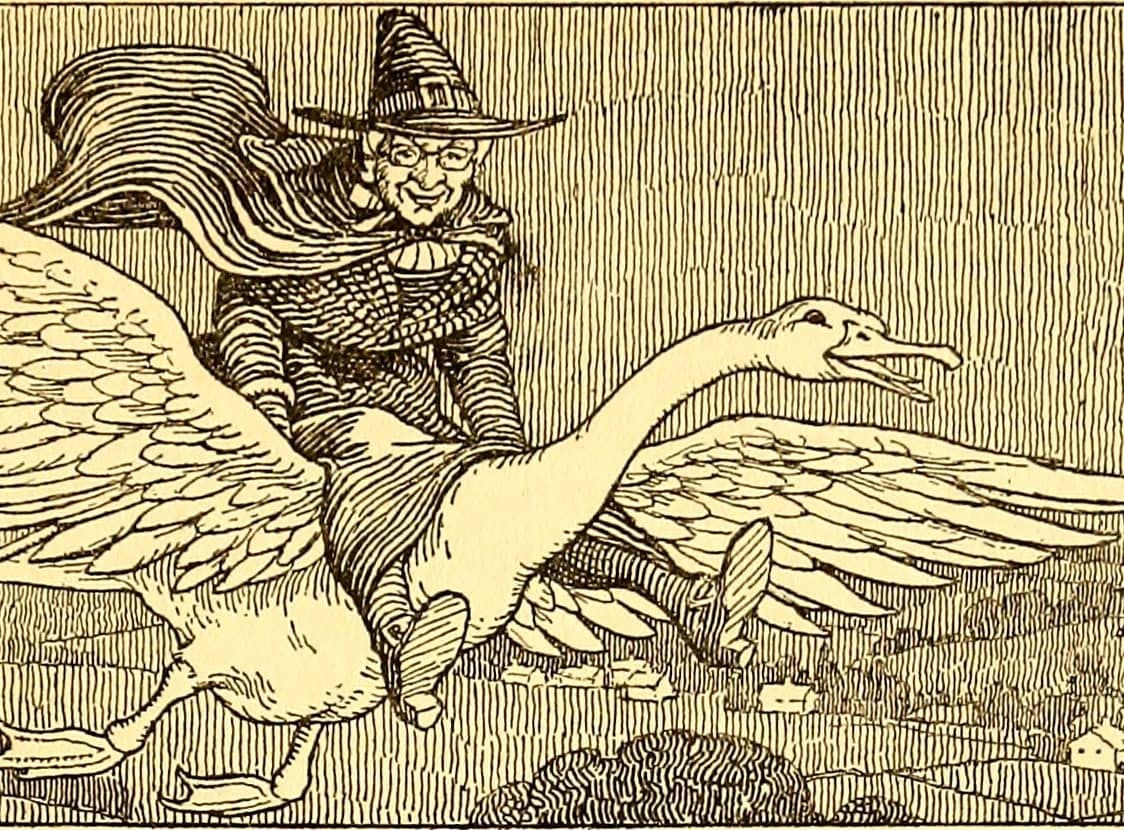
The name “Mother Goose” seems to have entered English from French fairy tales. But once John Newbery’s press published “Mother Goose’s Melody, or, Sonnets for the Cradle” (probably in the early 1780s), her name became forever associated in English with traditional children’s verse — that strange and wonderful body of old, anonymous counting rhymes, nonsense, political chants that had lost their meaning, and rhythmic folklore. In “There Was an Old Woman Tossed Up in a Blanket,” we get eight lines of tetrameter weirdness, rhymed abcb on an assonance rhyme in the first four lines, and dddd, a monorhyme in the second four lines — all to tell the story of an old housewife who thinks the sky needs a little tidying up.
By GEORGE WILLIS
|
By JEFFREY WELLS
|
By LUKE FUNK
|
By BENNY AVNI
|
By JOSEPH CURL
|
By THE NEW YORK SUN
|
By JENNIFER DOHERTY
|
By JENNIFER DOHERTY
|The name “Mother Goose” seems to have entered English from French fairy tales. But once John Newbery’s press published “Mother Goose’s Melody, or, Sonnets for the Cradle” (probably in the early 1780s), her name became forever associated in English with traditional children’s verse — that strange and wonderful body of old, anonymous counting rhymes, nonsense, political chants that had lost their meaning, and rhythmic folklore. In “There Was an Old Woman Tossed Up in a Blanket,” we get eight lines of tetrameter weirdness, rhymed abcb on an assonance rhyme in the first four lines, and dddd, a monorhyme in the second four lines — all to tell the story of an old housewife who thinks the sky needs a little tidying up.
Already have a subscription? Sign in to continue reading
Cancel anytime
By continuing you agree to our Privacy Policy and Terms of Service.
Cancel anytime