

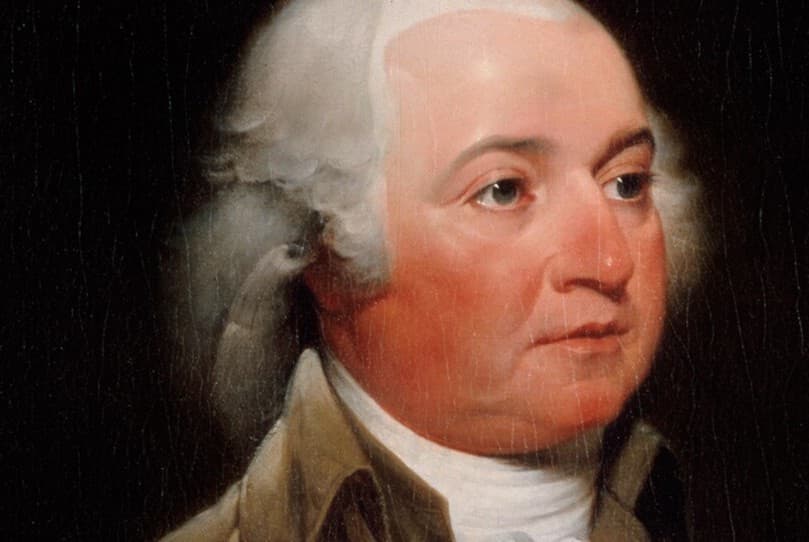
A Monument to the Adams Family
By THE NEW YORK SUN
|As powerful a recognition of impending death as English poetry has to offer, written while the author was in the Tower of London awaiting trial and execution.
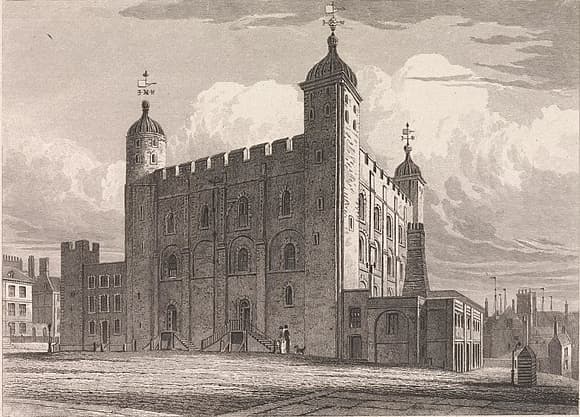
Chidiock Tichborne (1562–1586) died at age 24 — his bowels cut out while he was alive, before being hanged, drawn, and quartered by Queen Elizabeth’s executioners for his part in the Babington Plot to replace the Protestant Elizabeth with her cousin, the Catholic Mary, Queen of Scots. Tichborne was a minor figure in those days of high political and literary drama (although his captors did include Sir Francis Walsingham, Elizabeth’s spymaster, and the double agent Robert Poley, who would witness Christopher Marlowe’s murder in 1593). And yet, despite his youth and lack of influence, Tichborne produced one strangely powerful and memorable work while in the Tower of London awaiting trial and execution. His untitled self-elegy (sometimes given its first line as its title: “My prime of youth is but a frost of cares”) consists of three six-line pentameter stanzas, rhymed ababcc, each ending with the haunting refrain, “And now I live, and now my life is done” — as powerful a recognition of impending death as English poetry has to offer.
By THE NEW YORK SUN
|
By JENNIFER DOHERTY
|
By GARLAND TUCKER
|
By LUKE FUNK
|
By HOLLIE McKAY
|
By HOLLIE McKAY
|
By BRADLEY CORTRIGHT
|
By A.R. HOFFMAN
|Chidiock Tichborne (1562–1586) died at age 24 — his bowels cut out while he was alive, before being hanged, drawn, and quartered by Queen Elizabeth’s executioners for his part in the Babington Plot to replace the Protestant Elizabeth with her cousin, the Catholic Mary, Queen of Scots. Tichborne was a minor figure in those days of high political and literary drama (although his captors did include Sir Francis Walsingham, Elizabeth’s spymaster, and the double agent Robert Poley, who would witness Christopher Marlowe’s murder in 1593). And yet, despite his youth and lack of influence, Tichborne produced one strangely powerful and memorable work while in the Tower of London awaiting trial and execution. His untitled self-elegy (sometimes given its first line as its title: “My prime of youth is but a frost of cares”) consists of three six-line pentameter stanzas, rhymed ababcc, each ending with the haunting refrain, “And now I live, and now my life is done” — as powerful a recognition of impending death as English poetry has to offer.
Already have a subscription? Sign in to continue reading
Cancel anytime
By continuing you agree to our Privacy Policy and Terms of Service.
Cancel anytime