
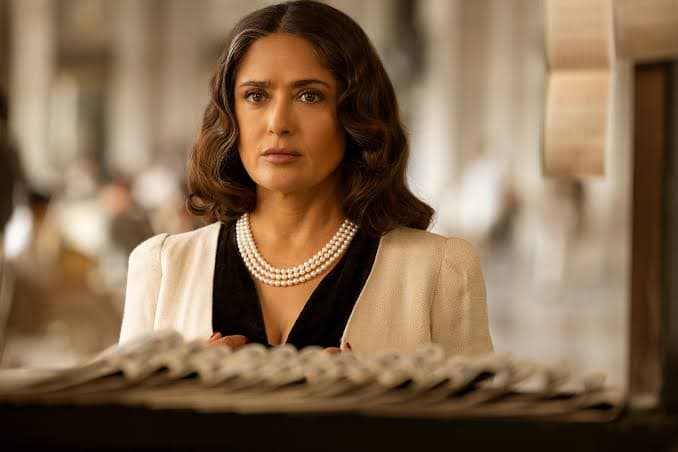
Angelina Jolie’s ‘Without Blood’ Fights On, Largely Unseen
By JEFFREY WELLS
|This article is from the archive of The New York Sun before the launch of its new website in 2022. The Sun has neither altered nor updated such articles but will seek to correct any errors, mis-categorizations or other problems introduced during transfer.

Published:
Updated:
The 1950s were arguably the greatest years of the Western — the period in which clichés were sustained and destabilized through psychology, revisionism, high style, and the kind of grandeur that follows when the most durable clichés are reframed against classical paradigms. Consider “The Furies,” in which a baggy reworking of the Oresteia is played out in an agora that stretches to the horizon, encompassing endless cattle pastures, mountainous outposts, a city strip with a saloon and bank, and communities of squatters. Yet ponderousness has no place on this Ponderosa. Anthony Mann was a director who knew his Aeschylus well enough to keep the story front and center, goading it with efficiency and brio, confining the poetry to visual effects that make the story memorable and, in two instances of sudden violence, awful — but in a good, Greek way.
By JEFFREY WELLS
|
By SHARON KEHNEMUI
|
By JOSEPH CURL
|
By LENORE SKENAZY
|
By JOSH HAMMER
|
By A.R. HOFFMAN
|
By DAVID JONES
|
By JOSEPH CURL
|The 1950s were arguably the greatest years of the Western — the period in which clichés were sustained and destabilized through psychology, revisionism, high style, and the kind of grandeur that follows when the most durable clichés are reframed against classical paradigms. Consider “The Furies,” in which a baggy reworking of the Oresteia is played out in an agora that stretches to the horizon, encompassing endless cattle pastures, mountainous outposts, a city strip with a saloon and bank, and communities of squatters. Yet ponderousness has no place on this Ponderosa. Anthony Mann was a director who knew his Aeschylus well enough to keep the story front and center, goading it with efficiency and brio, confining the poetry to visual effects that make the story memorable and, in two instances of sudden violence, awful — but in a good, Greek way.
Already have a subscription? Sign in to continue reading
Cancel anytime
By continuing you agree to our Privacy Policy and Terms of Service.
Cancel anytime