
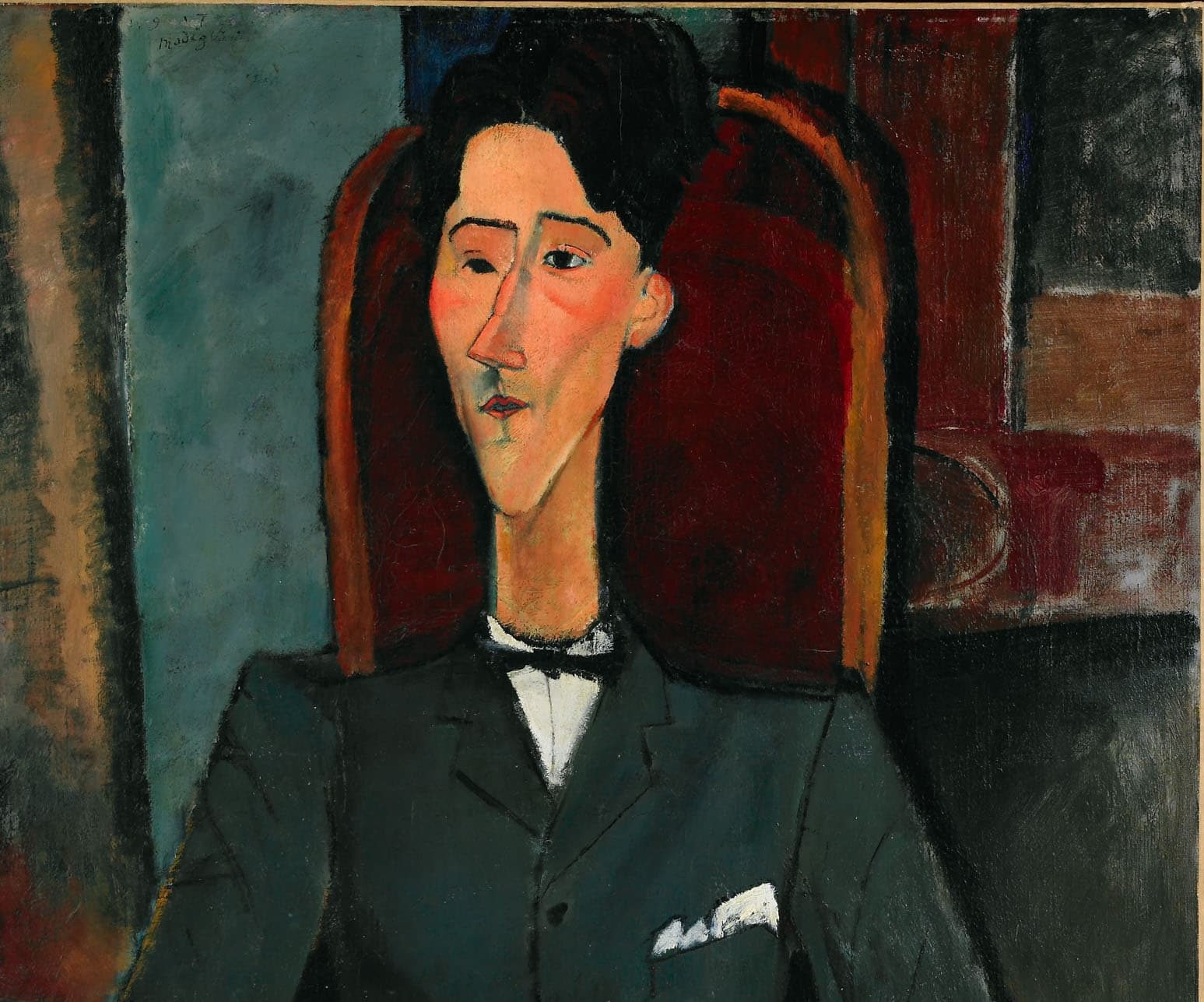
Cézanne, Modigliani, and Soutine: Parisian Rebels Who Made Art Modern Reunite at Brooklyn Museum
By A.R. HOFFMAN
|This article is from the archive of The New York Sun before the launch of its new website in 2022. The Sun has neither altered nor updated such articles but will seek to correct any errors, mis-categorizations or other problems introduced during transfer.

Published:
Updated:
Five years ago, Antonio Muñoz Molina’s novel “Sepharad” was published in English to rapturous reviews. Not since W.G. Sebald’s “The Emigrants” had a new European writer so powerfully seized the imagination of American readers. “Sepharad” was, in fact, a kind of transposition, into Spanish history and language, of Sebald’s masterpiece — with its blending of fact and fiction, its obsession with the horrors of the 20th century, and its deeply ethical insistence on retrieving individual stories obliterated by history. In a fluid, even slippery narrative, Mr. Muñoz Molina braided the stories of Sephardic Jews, exiled from Spain in the 15th century, with the experiences of Spaniards during that country’s civil war, and the more public lives of figures such as Franz Kafka. I’m not sure how many people read “Sepharad” — it was not the kind of book that makes a best seller — but it helped to give Mr. Muñoz Molina the literary stature in America that he has long enjoyed in Spain, where the 52-year-old is one of the leading writers of his generation.
By A.R. HOFFMAN
|
By GEORGE WILLIS
|
By DAVID JONES
|
By JOSEPH CURL
|
By HOLLIE McKAY
|
By HOLLIE McKAY
|
By HOLLIE McKAY
|
By HOLLIE McKAY
|Five years ago, Antonio Muñoz Molina’s novel “Sepharad” was published in English to rapturous reviews. Not since W.G. Sebald’s “The Emigrants” had a new European writer so powerfully seized the imagination of American readers. “Sepharad” was, in fact, a kind of transposition, into Spanish history and language, of Sebald’s masterpiece — with its blending of fact and fiction, its obsession with the horrors of the 20th century, and its deeply ethical insistence on retrieving individual stories obliterated by history. In a fluid, even slippery narrative, Mr. Muñoz Molina braided the stories of Sephardic Jews, exiled from Spain in the 15th century, with the experiences of Spaniards during that country’s civil war, and the more public lives of figures such as Franz Kafka. I’m not sure how many people read “Sepharad” — it was not the kind of book that makes a best seller — but it helped to give Mr. Muñoz Molina the literary stature in America that he has long enjoyed in Spain, where the 52-year-old is one of the leading writers of his generation.
Already have a subscription? Sign in to continue reading
Cancel anytime
By continuing you agree to our Privacy Policy and Terms of Service.
Cancel anytime