

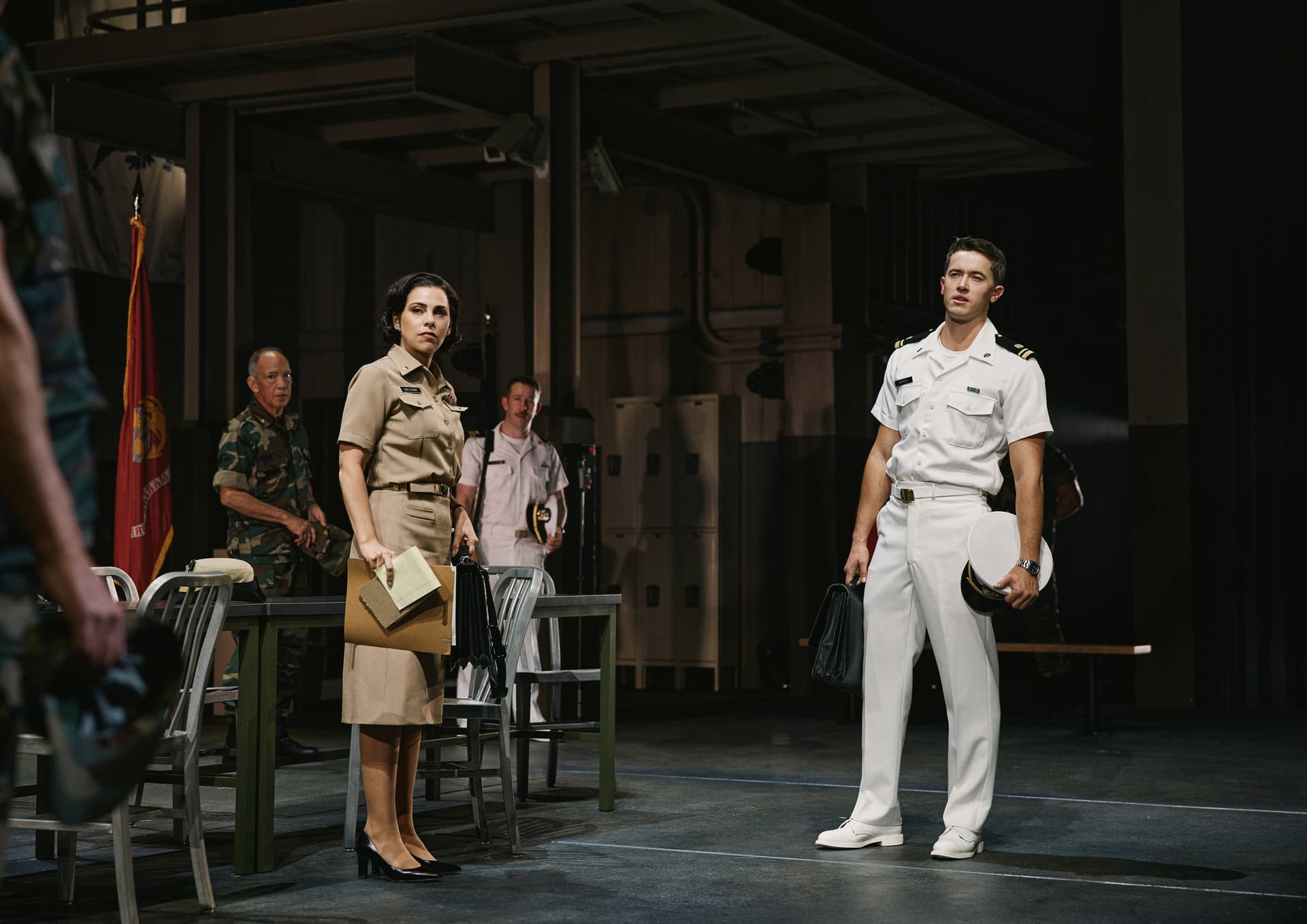
Aaron Sorkin Once Again Handles the Truth in Timely ‘A Few Good Men’
By ELYSA GARDNER
|The key scene in ‘Paris Blues,’ at least for those honing in on Armstrong, is when his character gets into a musical cutting contest with characters played by Paul Newman and Sidney Poitier.

Sidney Poitier wasn’t happy with Martin Ritt’s “Paris Blues” (1961), not at all. Writing in his 1981 autobiography, “This Life,” Poitier rued the screen adaptation of Harold Flender’s 1957 novel of the same name, stating that the script was “a one-dimensional concoction.” Most egregious of all was how United Artists forced its hand when the initial storyline involved interracial romance. The studio “chickened out” for the betterment of a public it deemed ill-equipped to deal with such a thing.
By ELYSA GARDNER
|
By ROSS ANDERSON
|
By CARLOS SOUSA
|
By MARIO NAVES
|
By ELYSA GARDNER
|
By ALEXANDER LARMAN
|
By LAWRENCE KUDLOW
|
By THE NEW YORK SUN
|Sidney Poitier wasn’t happy with Martin Ritt’s “Paris Blues” (1961), not at all. Writing in his 1981 autobiography, “This Life,” Poitier rued the screen adaptation of Harold Flender’s 1957 novel of the same name, stating that the script was “a one-dimensional concoction.” Most egregious of all was how United Artists forced its hand when the initial storyline involved interracial romance. The studio “chickened out” for the betterment of a public it deemed ill-equipped to deal with such a thing.
Already have a subscription? Sign in to continue reading
Cancel anytime
By continuing you agree to our Privacy Policy and Terms of Service.
Cancel anytime