


NYC Comptroller Mark Levine’s Broken Pledge on Israel Bonds Will Fuel BDS, Predecessor Tells the Sun
By LUKE FUNK
|Language itself becomes the instrument by which life-giving music is made.
Readers chiefly remember Elizabeth Barrett Browning (1806–1861), whose two hundred seventeenth birthday we mark today, as a Victorian master of the sonnet. Many readers, familiar with her famous “Sonnets from the Portuguese,” might assume that she never wrote anything else. But in fact, her ear for the music of rhyme and meter was versatile and wide-ranging, as evidenced by our commemorative Poem of the Day.
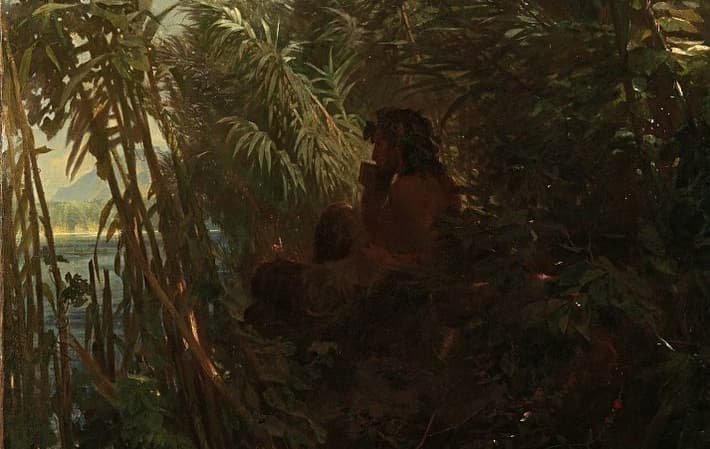
“A Musical Instrument” both tells a story and is, itself, the thing its title suggests. In literary hindsight, the poem’s subject and setting — the Greek god Pan among the reeds of the river — call to mind the magical chapter at the heart of Kenneth Graeme’s “The Wind in the Willows,” when, seeking the lost baby otter, Rat and Mole stumble onto a strange river island and into a vision of glorious transfiguration, in which the god Pan, as the spirit of all wild places, makes himself known to them.
Here, Pan, the god of rustic music, makes a pipe from a water reed. This pipe’s music breathes life into the natural world around it. The poem, meanwhile, creates its own music, driven by incantatory repetitions and a six-line variation of the classic ballad quatrain. The two extra tetrameter lines between the trimeter lines generate a dreamy suspension of the stanza’s forward impulse. Language itself becomes the instrument by which life-giving music is made.
By LUKE FUNK
|
By DAVID HIROSHI JAGER
|
By THE NEW YORK SUN
|
By LAWRENCE KUDLOW
|
By BRADLEY CORTRIGHT
|
By MATTHEW RICE
|
By ALEX ZDAN
|
By JOSEPH CURL
|Readers chiefly remember Elizabeth Barrett Browning (1806–1861), whose two hundred seventeenth birthday we mark today, as a Victorian master of the sonnet. Many readers, familiar with her famous “Sonnets from the Portuguese,” might assume that she never wrote anything else. But in fact, her ear for the music of rhyme and meter was versatile and wide-ranging, as evidenced by our commemorative Poem of the Day.
“A Musical Instrument” both tells a story and is, itself, the thing its title suggests. In literary hindsight, the poem’s subject and setting — the Greek god Pan among the reeds of the river — call to mind the magical chapter at the heart of Kenneth Graeme’s “The Wind in the Willows,” when, seeking the lost baby otter, Rat and Mole stumble onto a strange river island and into a vision of glorious transfiguration, in which the god Pan, as the spirit of all wild places, makes himself known to them.
Here, Pan, the god of rustic music, makes a pipe from a water reed. This pipe’s music breathes life into the natural world around it. The poem, meanwhile, creates its own music, driven by incantatory repetitions and a six-line variation of the classic ballad quatrain. The two extra tetrameter lines between the trimeter lines generate a dreamy suspension of the stanza’s forward impulse. Language itself becomes the instrument by which life-giving music is made.
Cancel anytime
By continuing you agree to our Privacy Policy and Terms of Service.
Cancel anytime