


AI Threats Are Expected To Figure in Prep Talks for Trump-Xi Summit
By DAVID JONES
|What we experience in Edward Thomas’ poem is not Wordsworth’s ’emotion recollected in tranquility,’ but tranquility recollected, presumably, in the pulverizing emotional mill of the war.
It was William Wordsworth (1770-1850) who invented the phrase “spots of time.” In his long, boyhood-haunted poem, “The Prelude,” he wrote,
There are in our existence spots of time,
That with distinct pre-eminence retain
A renovating virtue, whence — depressed
By false opinion and contentious thought,
Or aught of heavier or more deadly weight,
In trivial occupations, and the round
Of ordinary intercourse — our minds
Are nourished and invisibly repaired . . .
In other words, some experience or vision, however fleetingly glimpsed, endures in memory as a redemptive and healing presence, to “renovate” and “repair” the mind caught in and damaged by some later darkness. So Wordsworth’s own remembered encounters with the sublime, in the wild country around the River Derwent, strike a continual light to illuminate the rest of his life.
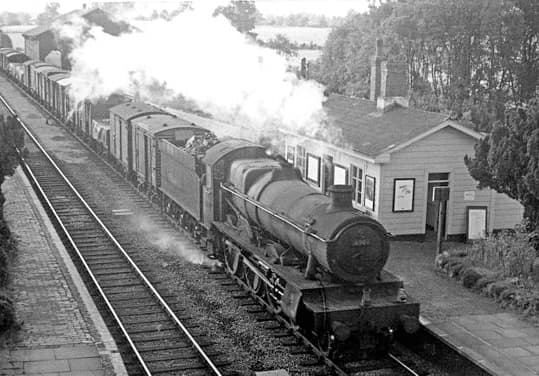
So, too, a country station glimpsed from a train, for the later English poet Edward Thomas (1878–1917). Thomas, killed at Arras, in France, on Easter Monday in the last full year of World War I, is notable as a war poet whose most famous poem isn’t about war at all. At least, it’s not directly about war. Slated to be published just before its author’s battlefield death, “Adlestrop” recalls a railway journey taken before the outbreak of the war. The poem, in four tetrameter quatrains, offers a healing backward glimpse, triggered by some mention of the name, of a place where nothing is happening.
What we experience through it is not Wordsworth’s “emotion recollected in tranquility,” but tranquility recollected, presumably, in the pulverizing emotional mill of the war. It’s a tranquility composed of inconsequential sounds and sights: someone clearing his throat, the high-clouded summer sky, the wind on the grasses. And birdsong, which seems to open out as the train pulls away again, into the sounds of all the birds at the heart of an England the poem’s speaker carries with him and will never see again.
By DAVID JONES
|
By JOSEPH CURL
|
By DAVID JONES
|
By JOSEPH CURL
|
By DAVID HIROSHI JAGER
|
By JOSEPH CURL
|
By DONALD KIRK
|
By MARIO NAVES
|It was William Wordsworth (1770-1850) who invented the phrase “spots of time.” In his long, boyhood-haunted poem, “The Prelude,” he wrote,
There are in our existence spots of time,
That with distinct pre-eminence retain
A renovating virtue, whence — depressed
By false opinion and contentious thought,
Or aught of heavier or more deadly weight,
In trivial occupations, and the round
Of ordinary intercourse — our minds
Are nourished and invisibly repaired . . .
In other words, some experience or vision, however fleetingly glimpsed, endures in memory as a redemptive and healing presence, to “renovate” and “repair” the mind caught in and damaged by some later darkness. So Wordsworth’s own remembered encounters with the sublime, in the wild country around the River Derwent, strike a continual light to illuminate the rest of his life.
So, too, a country station glimpsed from a train, for the later English poet Edward Thomas (1878–1917). Thomas, killed at Arras, in France, on Easter Monday in the last full year of World War I, is notable as a war poet whose most famous poem isn’t about war at all. At least, it’s not directly about war. Slated to be published just before its author’s battlefield death, “Adlestrop” recalls a railway journey taken before the outbreak of the war. The poem, in four tetrameter quatrains, offers a healing backward glimpse, triggered by some mention of the name, of a place where nothing is happening.
What we experience through it is not Wordsworth’s “emotion recollected in tranquility,” but tranquility recollected, presumably, in the pulverizing emotional mill of the war. It’s a tranquility composed of inconsequential sounds and sights: someone clearing his throat, the high-clouded summer sky, the wind on the grasses. And birdsong, which seems to open out as the train pulls away again, into the sounds of all the birds at the heart of an England the poem’s speaker carries with him and will never see again.
Cancel anytime
By continuing you agree to our Privacy Policy and Terms of Service.
Cancel anytime