

Albany Is Ordering New York Sheriffs To Refuse To Protect Their Citizens
By DALE WILCOX
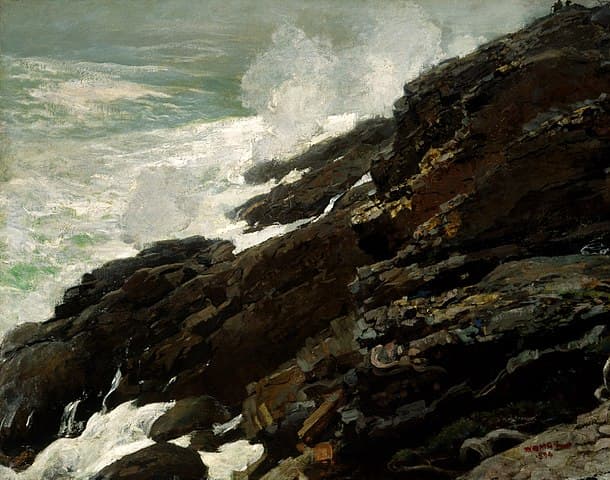
|Tennyson’s poem emphasizes the movement of time, a one-way current carrying human lives with it into darkness, while in the background beats the endless cyclical motion of the sea.

Published:
Updated:
England’s longest-serving poet laureate, Alfred, Lord Tennyson (1809–1892), filled that post from Wordsworth’s death in 1850 until his own, nearly half a century later. Tennyson stands as the archetype of laureates, able to render — seemingly without effort — into memorable yet accessible verse the imagination of an entire era. In Tennyson we find the whole range of Victorian concerns, from the neo-medievalism that gave rise to both St. Pancras railway station and Tennyson’s epic “Idylls of the King,” to the cultural preoccupation with grief epitomized in Queen Victoria’s long mourning for the prince consort, Albert. Certainly two kinds of grief, for a particular personal loss and for the passing of a few irretrievable golden hours, inform today’s poem, “Break, Break, Break.” Variations in the ballad meter, the stark accents of Break, break, break contrasting with the anapestic and iambic fluidity of the rest of the poem, emphasize the movement of time, a one-way current carrying human lives with it into darkness, while in the background beats the endless cyclical motion of the sea.
By DALE WILCOX
|
By MICHAEL BARONE
|
By BEN CLERKIN
|
By HOLLIE McKAY
|
By ELYSA GARDNER
|
By JOSEPH CURL
|
By LAWRENCE KUDLOW
|
By BENNY AVNI
|England’s longest-serving poet laureate, Alfred, Lord Tennyson (1809–1892), filled that post from Wordsworth’s death in 1850 until his own, nearly half a century later. Tennyson stands as the archetype of laureates, able to render — seemingly without effort — into memorable yet accessible verse the imagination of an entire era. In Tennyson we find the whole range of Victorian concerns, from the neo-medievalism that gave rise to both St. Pancras railway station and Tennyson’s epic “Idylls of the King,” to the cultural preoccupation with grief epitomized in Queen Victoria’s long mourning for the prince consort, Albert. Certainly two kinds of grief, for a particular personal loss and for the passing of a few irretrievable golden hours, inform today’s poem, “Break, Break, Break.” Variations in the ballad meter, the stark accents of Break, break, break contrasting with the anapestic and iambic fluidity of the rest of the poem, emphasize the movement of time, a one-way current carrying human lives with it into darkness, while in the background beats the endless cyclical motion of the sea.
Already have a subscription? Sign in to continue reading
Cancel anytime
By continuing you agree to our Privacy Policy and Terms of Service.
Cancel anytime