


Bruce Blakeman for Governor
By THE NEW YORK SUN
|The dead, especially the great figures of the past, grant us the comfort and wisdom to learn how to live — and how to die.
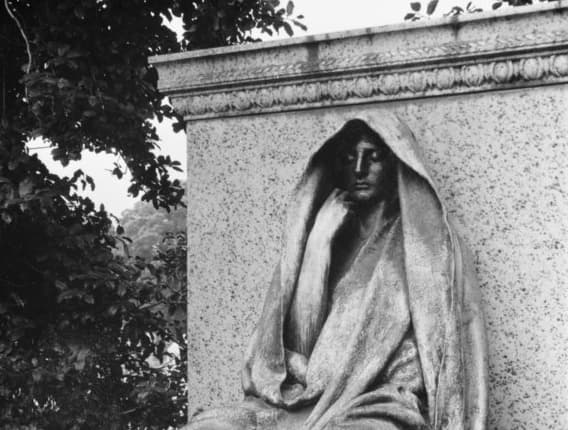
Robert Southey (1774–1843) was a minor Romantic poet, a minor author of scribbled translations for money, a minor figure among the great collection of Lake District poets in his time. But he ended up poet laureate of Great Britain — a distinct improvement on his predecessors Henry James Pye and Thomas Wharton, and a transition to the great Victorian poet laureates of Wordsworth and Tennyson. Besides, all of the minor work of Southey added up to something fascinating. In “My Days among the Dead Are Past,” he uses an interesting stanza: a ballad-meter quatrain, capped with a tetrameter couplet. Southey was always good at ballad meter (rhymed four-foot lines alternating with three-foot lines), and although that meter would not be many poets’ first choice for a mortuary poem, the ending couplet helps maintain the grave thoughts of the poet. The dead, especially the great figures of the past, grant us the comfort and wisdom to learn how to live — and how to die.
By THE NEW YORK SUN
|
By LAURA THOMPSON
|
By DAVID MASTIO
|
By DONALD KIRK
|
By HOLLIE McKAY
|
By CONRAD BLACK
|
By MICHAEL BARONE
|
By A.R. HOFFMAN
|Robert Southey (1774–1843) was a minor Romantic poet, a minor author of scribbled translations for money, a minor figure among the great collection of Lake District poets in his time. But he ended up poet laureate of Great Britain — a distinct improvement on his predecessors Henry James Pye and Thomas Wharton, and a transition to the great Victorian poet laureates of Wordsworth and Tennyson. Besides, all of the minor work of Southey added up to something fascinating. In “My Days among the Dead Are Past,” he uses an interesting stanza: a ballad-meter quatrain, capped with a tetrameter couplet. Southey was always good at ballad meter (rhymed four-foot lines alternating with three-foot lines), and although that meter would not be many poets’ first choice for a mortuary poem, the ending couplet helps maintain the grave thoughts of the poet. The dead, especially the great figures of the past, grant us the comfort and wisdom to learn how to live — and how to die.
Already have a subscription? Sign in to continue reading
Cancel anytime
By continuing you agree to our Privacy Policy and Terms of Service.
Cancel anytime