


An Alaskan Mystery Buried in Pennsylvania
By CARL ROLLYSON
|Joseph Blanco White wrote some now mostly forgotten poetry, but this sonnet, orginally dedicated to Samuel Taylor Coleridge, should not be allowed to fade away.
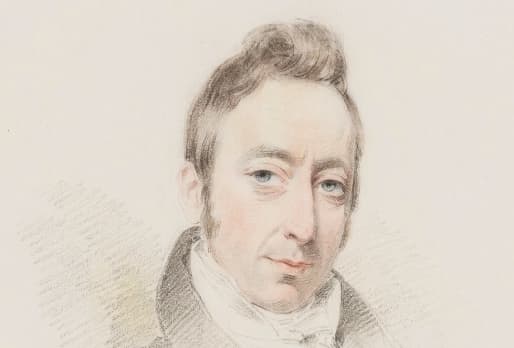
Though his younger friend John Henry Newman (1801–1890) moved in one direction, to Catholicism from Protestantism, Joseph Blanco White (1775–1841) moved in the other, drifting to Anglicanism and eventually Unitarianism from the Catholicism of his childhood.
Of Irish descent, he was born and educated in Spain before his religious doubts brought him to England in 1810. While editing a Spanish-language magazine in London, he was anathematized in Spain over his support for greater Latin American independence. His books “Second Travels of an Irish Gentleman in Search of a Religion” (1834) and “Observations on Heresy and Orthodoxy” (1835) formed part of the religious arguments of the time.
White also wrote some now mostly forgotten poetry, but his sonnet, “Night and Death,” orginally dedicated to Samuel Taylor Coleridge, should not be allowed to fade away. More or less Shakespearian in form — three quatrains and a couplet, but rhymed abba abba cdcd ff — the sonnet offers an image of Adam frightened by the disappearance of the sun and the coming of night.
By CARL ROLLYSON
|
By BRADLEY CORTRIGHT
|
By LAWRENCE KUDLOW
|
By THE NEW YORK SUN
|
By BENNY AVNI
|
By LUKE FUNK
|
By BRADLEY CORTRIGHT
|
By THE NEW YORK SUN
|Though his younger friend John Henry Newman (1801–1890) moved in one direction, to Catholicism from Protestantism, Joseph Blanco White (1775–1841) moved in the other, drifting to Anglicanism and eventually Unitarianism from the Catholicism of his childhood.
Of Irish descent, he was born and educated in Spain before his religious doubts brought him to England in 1810. While editing a Spanish-language magazine in London, he was anathematized in Spain over his support for greater Latin American independence. His books “Second Travels of an Irish Gentleman in Search of a Religion” (1834) and “Observations on Heresy and Orthodoxy” (1835) formed part of the religious arguments of the time.
White also wrote some now mostly forgotten poetry, but his sonnet, “Night and Death,” orginally dedicated to Samuel Taylor Coleridge, should not be allowed to fade away. More or less Shakespearian in form — three quatrains and a couplet, but rhymed abba abba cdcd ff — the sonnet offers an image of Adam frightened by the disappearance of the sun and the coming of night.
Already have a subscription? Sign in to continue reading
Cancel anytime
By continuing you agree to our Privacy Policy and Terms of Service.
Cancel anytime