


Trump’s Fiery Pep Talk Fuels USA Team to Historic Presidents Cup Comeback
By GEORGE WILLIS
|Philip Freneau’s poem remind us not only of the impressive life of Benjamin Franklin, but of the old public habit, fast slipping away from us, of remembering great people as great.
Like his literary descendents, the Transcendentalists, Philip Freneau (1752–1832) was the sort of poet whose body of work largely illustrates that his real gift was for the essay. Wikipedia lists Freneau’s occupations as “poet, writer, polemicist,” which is accurate enough, though possibly it would be more accurate if the order were reversed. In the early 1770s, after abortive stints at teaching and the study of theology, Freneau first attracted literary notice not for poetry, but for anti-British essays as the Revolutionary War loomed.
His six-week incarceration on a British prison ship during the war did lead to the writing and publication of a long poem called, unsurprisingly, “The British Prison Ship” — a poem that might have been more compelling, and had more staying power, as an essay. Nobody else was in the running for “Poet of the American Revolution,” however, so that crown landed on Freneau’s head.
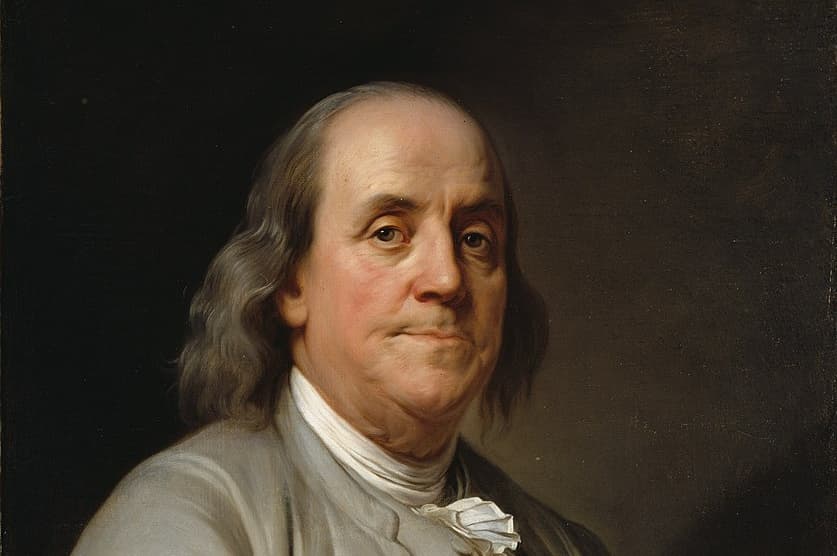
Today’s Poem of the Day appears on April 17, the anniversary of the day on which its subject, Benjamin Franklin (1706–1790), died. Freneau’s “On the Death of Dr. Benjamin Franklin” amounts to a verse essay establishing the greatness of its subject, in regular abab tetrameter quatrains that culminate in a six-line encomium. As a poem, it’s digestible and easy to memorize; in it we can discern the seeds of influence that would later germinate in the work of the Fireside Poets. And in fact, on this day, the poem does remind us not only of the long, varied, impressive life of Benjamin Franklin, but of the old public habit, fast slipping away from us, of remembering great people as great.
By GEORGE WILLIS
|
By THE NEW YORK SUN
|
By MATTHEW RICE
|
By DEAN KARAYANIS
|
By JAKE WALLIS SIMONS
|
By HOLLIE McKAY
|
By DAVID MASTIO
|
By DAVID MASTIO
|Like his literary descendents, the Transcendentalists, Philip Freneau (1752–1832) was the sort of poet whose body of work largely illustrates that his real gift was for the essay. Wikipedia lists Freneau’s occupations as “poet, writer, polemicist,” which is accurate enough, though possibly it would be more accurate if the order were reversed. In the early 1770s, after abortive stints at teaching and the study of theology, Freneau first attracted literary notice not for poetry, but for anti-British essays as the Revolutionary War loomed.
His six-week incarceration on a British prison ship during the war did lead to the writing and publication of a long poem called, unsurprisingly, “The British Prison Ship” — a poem that might have been more compelling, and had more staying power, as an essay. Nobody else was in the running for “Poet of the American Revolution,” however, so that crown landed on Freneau’s head.
Today’s Poem of the Day appears on April 17, the anniversary of the day on which its subject, Benjamin Franklin (1706–1790), died. Freneau’s “On the Death of Dr. Benjamin Franklin” amounts to a verse essay establishing the greatness of its subject, in regular abab tetrameter quatrains that culminate in a six-line encomium. As a poem, it’s digestible and easy to memorize; in it we can discern the seeds of influence that would later germinate in the work of the Fireside Poets. And in fact, on this day, the poem does remind us not only of the long, varied, impressive life of Benjamin Franklin, but of the old public habit, fast slipping away from us, of remembering great people as great.
Cancel anytime
By continuing you agree to our Privacy Policy and Terms of Service.
Cancel anytime