


Albany Is Ordering New York Sheriffs To Refuse To Protect Their Citizens
By DALE WILCOX
|The poem is a wild call for an impossible future that pious hope must nonetheless demand.
It was 1850 when Alfred, Lord Tennyson (1809–1892) published “In Memoriam A.H.H.,” an elegy for his close college friend, Arthur Henry Hallam, who had died 17 years before, at the age of 22. Or perhaps “elegy” is the wrong word for a poem with 2,916 lines in 133 sections — a vast canvas on which Tennyson sought to express his grief at the loss of his friend, along with his grasping for the spirit of the age, his humanism, his religious sense, and his mixture of optimism about human truth and pessimism about human error.
Part of the reason “In Memoriam” could encompass so much is its form, written in tetrameter quatrains with the rhyme scheme that Tennyson made his own (still called the “In Memoriam rhyme,” which runs abba, the two middle lines rhymed with each other, and the first line with the last). The form proved so flexible that Tennyson could engage broader topics with it, and with “In Memoriam” he was free to range through a world that must take account of one incontrovertible fact: We live in a universe of death, and we must continue to live even when those we love die.
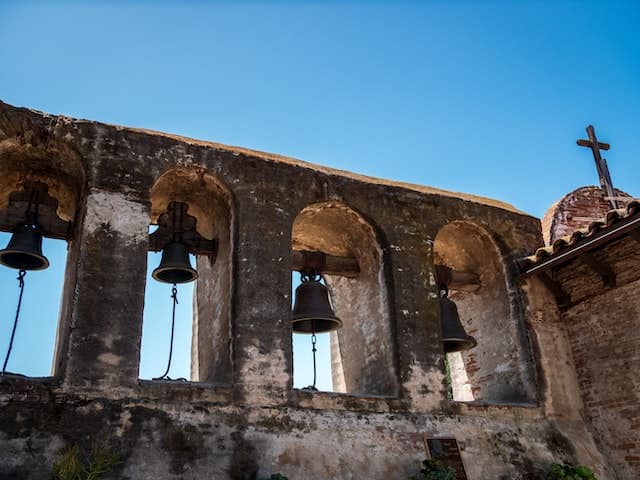
The form is even flexible enough to include a New Year’s lyric in Section 106. That section is today’s Poem of the Day, part of Tennyson’s reaching, in his concluding sections, toward consolation for his grief over his lost friend, as he seeks in the passage of time to find a gain to match the loss. “Ring out, wild bells” imagines the possibility that the New Year will abolish evil, disease, war. The poem is a wild call for an impossible future that pious hope must nonetheless demand: “Ring in the Christ that is to be.”
By DALE WILCOX
|
By MICHAEL BARONE
|
By BEN CLERKIN
|
By HOLLIE McKAY
|
By ELYSA GARDNER
|
By JOSEPH CURL
|
By LAWRENCE KUDLOW
|
By BENNY AVNI
|It was 1850 when Alfred, Lord Tennyson (1809–1892) published “In Memoriam A.H.H.,” an elegy for his close college friend, Arthur Henry Hallam, who had died 17 years before, at the age of 22. Or perhaps “elegy” is the wrong word for a poem with 2,916 lines in 133 sections — a vast canvas on which Tennyson sought to express his grief at the loss of his friend, along with his grasping for the spirit of the age, his humanism, his religious sense, and his mixture of optimism about human truth and pessimism about human error.
Part of the reason “In Memoriam” could encompass so much is its form, written in tetrameter quatrains with the rhyme scheme that Tennyson made his own (still called the “In Memoriam rhyme,” which runs abba, the two middle lines rhymed with each other, and the first line with the last). The form proved so flexible that Tennyson could engage broader topics with it, and with “In Memoriam” he was free to range through a world that must take account of one incontrovertible fact: We live in a universe of death, and we must continue to live even when those we love die.
The form is even flexible enough to include a New Year’s lyric in Section 106. That section is today’s Poem of the Day, part of Tennyson’s reaching, in his concluding sections, toward consolation for his grief over his lost friend, as he seeks in the passage of time to find a gain to match the loss. “Ring out, wild bells” imagines the possibility that the New Year will abolish evil, disease, war. The poem is a wild call for an impossible future that pious hope must nonetheless demand: “Ring in the Christ that is to be.”
Cancel anytime
By continuing you agree to our Privacy Policy and Terms of Service.
Cancel anytime