


An Alaskan Mystery Buried in Pennsylvania
By CARL ROLLYSON
|The intensity of meter and rhyme elevates the emptiness of this house to the level of archetype. No other house ever has been, or ever could be, so empty.
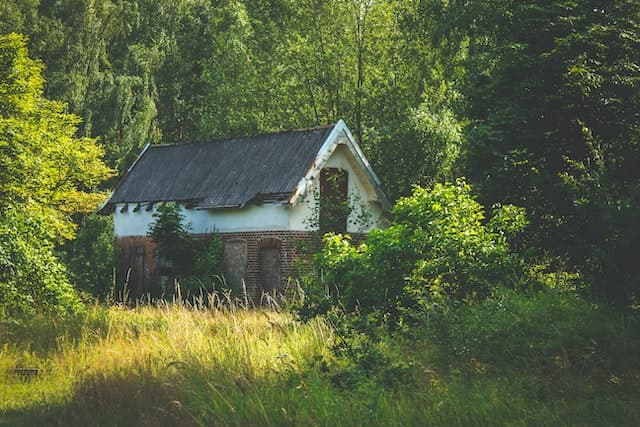
Like “Dream Song,” which appeared as the Sun’s Poem of the Day this past April, today’s poem by Walter de la Mare (1873–1956) invites the reader to indulge in a little frisson of creepiness. Whether intended for adults or for children, de la Mare’s best-known poems— “Someone,” for example — read like incantations, with their hypnotic repetitions, their invocations of mystery and the supernatural.
Take “The Empty House,” a poem for which summary falls flat. As its title indicates, it’s about an empty house. What animates the emptiness of this house is de la Mare’s relentless tetrameter, which resolves to trimeter in the last line of each stanza as well as, dramatically, in line fourteen: “only vacancy.“
The rhyme scheme, too, is incantatory and not a little claustrophobic. The pattern set by the opening octet is four pairs of couplets, but the first three pairs of rhymes are so close, even when they slant — is/trees/cries/skies/gaze/ways — that by the time we reach the final stanza, it’s no surprise to find that its first four lines all rhyme, an effect something like the visual obliteration of nightfall.
The intensity of meter and rhyme elevates the emptiness of this house to the level of archetype. No other house ever has been, or ever could be, so empty.
By CARL ROLLYSON
|
By BRADLEY CORTRIGHT
|
By LAWRENCE KUDLOW
|
By THE NEW YORK SUN
|
By BENNY AVNI
|
By LUKE FUNK
|
By BRADLEY CORTRIGHT
|
By THE NEW YORK SUN
|Like “Dream Song,” which appeared as the Sun’s Poem of the Day this past April, today’s poem by Walter de la Mare (1873–1956) invites the reader to indulge in a little frisson of creepiness. Whether intended for adults or for children, de la Mare’s best-known poems— “Someone,” for example — read like incantations, with their hypnotic repetitions, their invocations of mystery and the supernatural.
Take “The Empty House,” a poem for which summary falls flat. As its title indicates, it’s about an empty house. What animates the emptiness of this house is de la Mare’s relentless tetrameter, which resolves to trimeter in the last line of each stanza as well as, dramatically, in line fourteen: “only vacancy.“
The rhyme scheme, too, is incantatory and not a little claustrophobic. The pattern set by the opening octet is four pairs of couplets, but the first three pairs of rhymes are so close, even when they slant — is/trees/cries/skies/gaze/ways — that by the time we reach the final stanza, it’s no surprise to find that its first four lines all rhyme, an effect something like the visual obliteration of nightfall.
The intensity of meter and rhyme elevates the emptiness of this house to the level of archetype. No other house ever has been, or ever could be, so empty.
Cancel anytime
By continuing you agree to our Privacy Policy and Terms of Service.
Cancel anytime