


Exclusive: New York Democratic Socialists Privately Rail Against Mamdani, Fantasize About Seizing Power To Imprison Conservatives
By JENNIFER DOHERTY
|Leander swam for love, and Byron for glory, but they both ended up losing: The ancient mythological lover drowned, and the modern Romantic poet caught a cold.
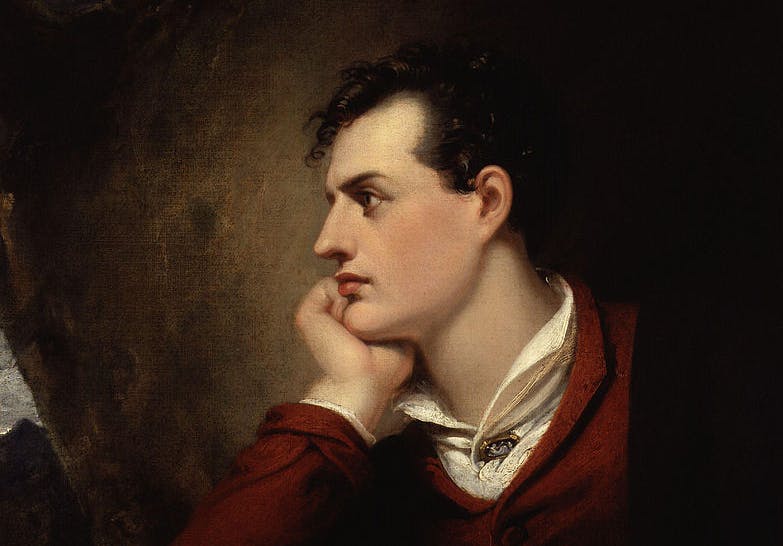
On May 3, 1810 — 113 years ago today — George Gordon Byron (1788–1824) swam to Asia from Europe. Or at least to Abydos, on the Turkish side of the Dardanelles (also called the Hellespont, the narrow passage that, together with the Bosporus and the Sea of Marmara, forms the passage that connects the Black Sea with the Mediterranean) from Sestos, on the European side. The fast current, cold on an early spring morning, pushed the swim to what was estimated as four miles, which Byron completed in an hour and ten minutes. (He was beaten by five minutes by his fellow swimmer, a British naval lieutenant, William Ekenhead, from HMS Salsette, which Byron was visiting.)
The reason for the swim lies in the classical learning that England considered education to be. In an ancient myth, told by Ovid and others, Hero, a priestess of Aphrodite living in a tower in Sestos on the European side of the strait, loved Leander, a young man from Abydos on the Asian side. So Leander would swim the Hellespont to visit her, then swim back so no one would know. And, it striking the poet that no one had tested the story, Lord Byron and Lieutenant Ekenhead decided to see if the journey was possible. In the myth, Leander would drown during an especially hazardous crossing on his last visit, and Byron rather doubted the story. He would write in a letter to a friend, “the current renders it hazardous, so much so, that I doubt whether Leander’s conjugal powers must not have been exhausted in his passage to Paradise.”
But the effort to test the myth’s practicality also led to today’s Poem of the Day, “Written After Swimming From Sestos To Abydos.” In tetrameter quatrains, Byron tells in the comedy of his swim — and includes one of his signature comic devices, using two words to rhyme with one in a feminine rhyme: plàgue you and àgue (an old word for a fever). Leander swam for love, and Byron for glory, but they both ended up losing: The ancient mythological lover drowned, and the modern Romantic poet caught a cold.
By JENNIFER DOHERTY
|
By THE NEW YORK SUN
|
By DONALD KIRK
|
By LUKE FUNK
|
By GEORGE WILLIS
|
By BRADLEY CORTRIGHT
|
By MATTHEW RICE
|
By BENNY AVNI
|On May 3, 1810 — 113 years ago today — George Gordon Byron (1788–1824) swam to Asia from Europe. Or at least to Abydos, on the Turkish side of the Dardanelles (also called the Hellespont, the narrow passage that, together with the Bosporus and the Sea of Marmara, forms the passage that connects the Black Sea with the Mediterranean) from Sestos, on the European side. The fast current, cold on an early spring morning, pushed the swim to what was estimated as four miles, which Byron completed in an hour and ten minutes. (He was beaten by five minutes by his fellow swimmer, a British naval lieutenant, William Ekenhead, from HMS Salsette, which Byron was visiting.)
The reason for the swim lies in the classical learning that England considered education to be. In an ancient myth, told by Ovid and others, Hero, a priestess of Aphrodite living in a tower in Sestos on the European side of the strait, loved Leander, a young man from Abydos on the Asian side. So Leander would swim the Hellespont to visit her, then swim back so no one would know. And, it striking the poet that no one had tested the story, Lord Byron and Lieutenant Ekenhead decided to see if the journey was possible. In the myth, Leander would drown during an especially hazardous crossing on his last visit, and Byron rather doubted the story. He would write in a letter to a friend, “the current renders it hazardous, so much so, that I doubt whether Leander’s conjugal powers must not have been exhausted in his passage to Paradise.”
But the effort to test the myth’s practicality also led to today’s Poem of the Day, “Written After Swimming From Sestos To Abydos.” In tetrameter quatrains, Byron tells in the comedy of his swim — and includes one of his signature comic devices, using two words to rhyme with one in a feminine rhyme: plàgue you and àgue (an old word for a fever). Leander swam for love, and Byron for glory, but they both ended up losing: The ancient mythological lover drowned, and the modern Romantic poet caught a cold.
Cancel anytime
By continuing you agree to our Privacy Policy and Terms of Service.
Cancel anytime