

Dolly Parton’s Artistry Transcends Her Legend
By WILL FRIEDWALD
|We can memorize these quatrains readily and recite them with pleasure, savoring the idea of March as a palate-cleanser, the better to taste the bloom of spring when it comes.

Published:
Updated:
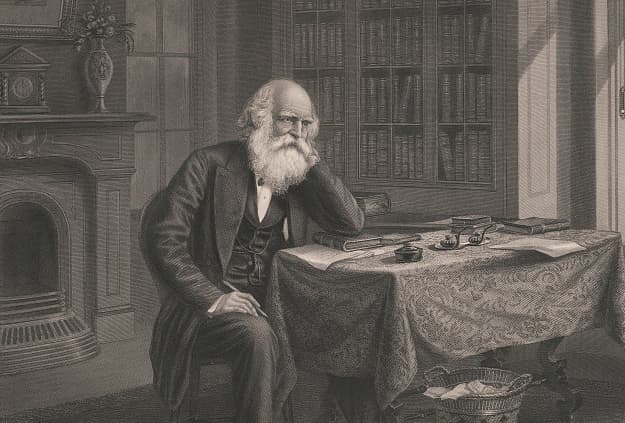
At seventeen, William Cullen Bryant (1794–1878) was already at work on the poem we all used to know, from our old high-school American-literature textbooks, as “Thanatopsis.” We know this poem as “Thanatopsis” — if in fact, we know it at all these days — because in 1817, the editors of the North American Review assigned the title to some random pages that Bryant’s father had picked up from his son’s desk and sent to the Review, along with a selection of his own poems. The poem that put the younger Bryant on the map of American letters first appeared in haphazard fragments, under a title its author never chose, and under the elder Bryant’s name. The resulting editorial embarrassment opened the door for any future submissions by William Cullen Bryant, which on the whole is not a terrible way to establish a literary reputation.
And what a reputation Bryant enjoyed during his long life. He was championed by Washington Irving, who orchestrated the publication of Bryant’s “Poems” in Great Britain. His fans included Edgar Allan Poe, who called his use of meter “voluptuous,” and children’s author Mary Mapes Dodge, who said that his poems had “wrought vast and far-reaching good in the world.” Literary history groups him with the Fireside Poets, Longfellow & Co., all of whom were wreaking similarly vast and far-reaching good in the form of digestible ideas rendered in strict meter. Perhaps the vastest and more far-reaching good these poets wrought was simply that in their own lifetimes, millions of people read, memorized, and recited their poems. Their poetry was, for an entire society, a voluntary pleasure. This, too, is not a terrible foundation for a literary reputation.
As we read “March,” today’s seasonal Poem of the Day, we might consider it as an example of that particular kind of good. If its language of storm-blasts and plashing rills doesn’t exactly arrest us with its originality or particularity, still these brisk tetrameter abab quatrains blow through their own landscape with the scouring force of the March wind. We can memorize these quatrains readily and recite them with pleasure, savoring the idea of March as a palate-cleanser, the better to taste the bloom of spring when it comes.
March
by William Cullen Bryant
By WILL FRIEDWALD
|
By MATTHEW RICE
|
By MATTHEW RICE
|
By JENNIFER DOHERTY
|
By SALENA ZITO
|
By ALEX ZDAN
|
By BRADLEY CORTRIGHT
|
By HARRY TANNER
|At seventeen, William Cullen Bryant (1794–1878) was already at work on the poem we all used to know, from our old high-school American-literature textbooks, as “Thanatopsis.” We know this poem as “Thanatopsis” — if in fact, we know it at all these days — because in 1817, the editors of the North American Review assigned the title to some random pages that Bryant’s father had picked up from his son’s desk and sent to the Review, along with a selection of his own poems. The poem that put the younger Bryant on the map of American letters first appeared in haphazard fragments, under a title its author never chose, and under the elder Bryant’s name. The resulting editorial embarrassment opened the door for any future submissions by William Cullen Bryant, which on the whole is not a terrible way to establish a literary reputation.
And what a reputation Bryant enjoyed during his long life. He was championed by Washington Irving, who orchestrated the publication of Bryant’s “Poems” in Great Britain. His fans included Edgar Allan Poe, who called his use of meter “voluptuous,” and children’s author Mary Mapes Dodge, who said that his poems had “wrought vast and far-reaching good in the world.” Literary history groups him with the Fireside Poets, Longfellow & Co., all of whom were wreaking similarly vast and far-reaching good in the form of digestible ideas rendered in strict meter. Perhaps the vastest and more far-reaching good these poets wrought was simply that in their own lifetimes, millions of people read, memorized, and recited their poems. Their poetry was, for an entire society, a voluntary pleasure. This, too, is not a terrible foundation for a literary reputation.
As we read “March,” today’s seasonal Poem of the Day, we might consider it as an example of that particular kind of good. If its language of storm-blasts and plashing rills doesn’t exactly arrest us with its originality or particularity, still these brisk tetrameter abab quatrains blow through their own landscape with the scouring force of the March wind. We can memorize these quatrains readily and recite them with pleasure, savoring the idea of March as a palate-cleanser, the better to taste the bloom of spring when it comes.
March
by William Cullen Bryant
Already have a subscription? Sign in to continue reading
Cancel anytime
By continuing you agree to our Privacy Policy and Terms of Service.