


Shane Gillis’s Crass ‘SNL’ Monologue Told Uncomfortable Truths About Gym Decency and Decorum
By CAROLINE DOWNEY
|We often praise pop musicians who manage to surf the zeitgeist’s wave to become the figures of their age. And we should do the same for poets. Longfellow was a popular poet for a reason
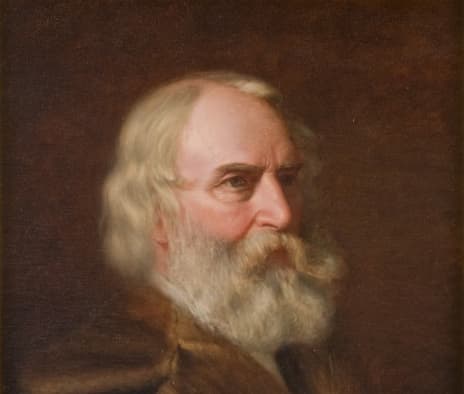
The more one reads of 19th-century English poetry, the more Tennyson emerges at its center, however reluctant we may be to admit it. Think of Gerard Manley Hopkins. Wouldn’t it be better if he, with his later-discovered eccentric verse, was the defining figure of Victorian literature?
In American verse of the era, the situation is even worse, for the central figure is Henry Wadsworth Longfellow (1807–1882), a lesser poet than Tennyson, and behind Longfellow among 19th-century American poetry loom the greater figures of Walt Whitman and Emily Dickinson.
The result of such feelings — along with our inheritance of the Edwardians’ sneer at the Victorians — has led to the gradual erasing of Longfellow. And that’s unfair, for as a poet he was highly competent, generally smart, and wise about the public emotions of his time. We often praise pop musicians who manage to surf the zeitgeist’s wave to become the figures of their age. And we should do the same for poets. Longfellow — whose birthday we celebrate today, February 27 — was a popular poet for a reason, and the more we read 19th-century American poetry, the more his work appears at the center of the age.
Here in the Sun, for a Poem of the Day, we’ve run Longfellow’s work on autumn, Christmas, and the sentiments of fatherhood. So why not add a poem on winter? In “Afternoon in February” Longfellow attempts a metrically tricky quatrain stanza of dimeter, two-beat lines, with the first two lines rhyming with each other and the last line rhyming with the last line of the next stanza — a kind of broken tetrameter that mirrors the season he describes. February gives us no hint of spring, just the winter that goes on and on.
By CAROLINE DOWNEY
|
By ALEX ZDAN
|
By JOSEPH CURL
|
By TOM DEIGNAN
|
By JENNIFER DOHERTY
|
By LUKE FUNK
|
By THE NEW YORK SUN
|
By MATTHEW RICE
|The more one reads of 19th-century English poetry, the more Tennyson emerges at its center, however reluctant we may be to admit it. Think of Gerard Manley Hopkins. Wouldn’t it be better if he, with his later-discovered eccentric verse, was the defining figure of Victorian literature?
In American verse of the era, the situation is even worse, for the central figure is Henry Wadsworth Longfellow (1807–1882), a lesser poet than Tennyson, and behind Longfellow among 19th-century American poetry loom the greater figures of Walt Whitman and Emily Dickinson.
The result of such feelings — along with our inheritance of the Edwardians’ sneer at the Victorians — has led to the gradual erasing of Longfellow. And that’s unfair, for as a poet he was highly competent, generally smart, and wise about the public emotions of his time. We often praise pop musicians who manage to surf the zeitgeist’s wave to become the figures of their age. And we should do the same for poets. Longfellow — whose birthday we celebrate today, February 27 — was a popular poet for a reason, and the more we read 19th-century American poetry, the more his work appears at the center of the age.
Here in the Sun, for a Poem of the Day, we’ve run Longfellow’s work on autumn, Christmas, and the sentiments of fatherhood. So why not add a poem on winter? In “Afternoon in February” Longfellow attempts a metrically tricky quatrain stanza of dimeter, two-beat lines, with the first two lines rhyming with each other and the last line rhyming with the last line of the next stanza — a kind of broken tetrameter that mirrors the season he describes. February gives us no hint of spring, just the winter that goes on and on.
Cancel anytime
By continuing you agree to our Privacy Policy and Terms of Service.
Cancel anytime