


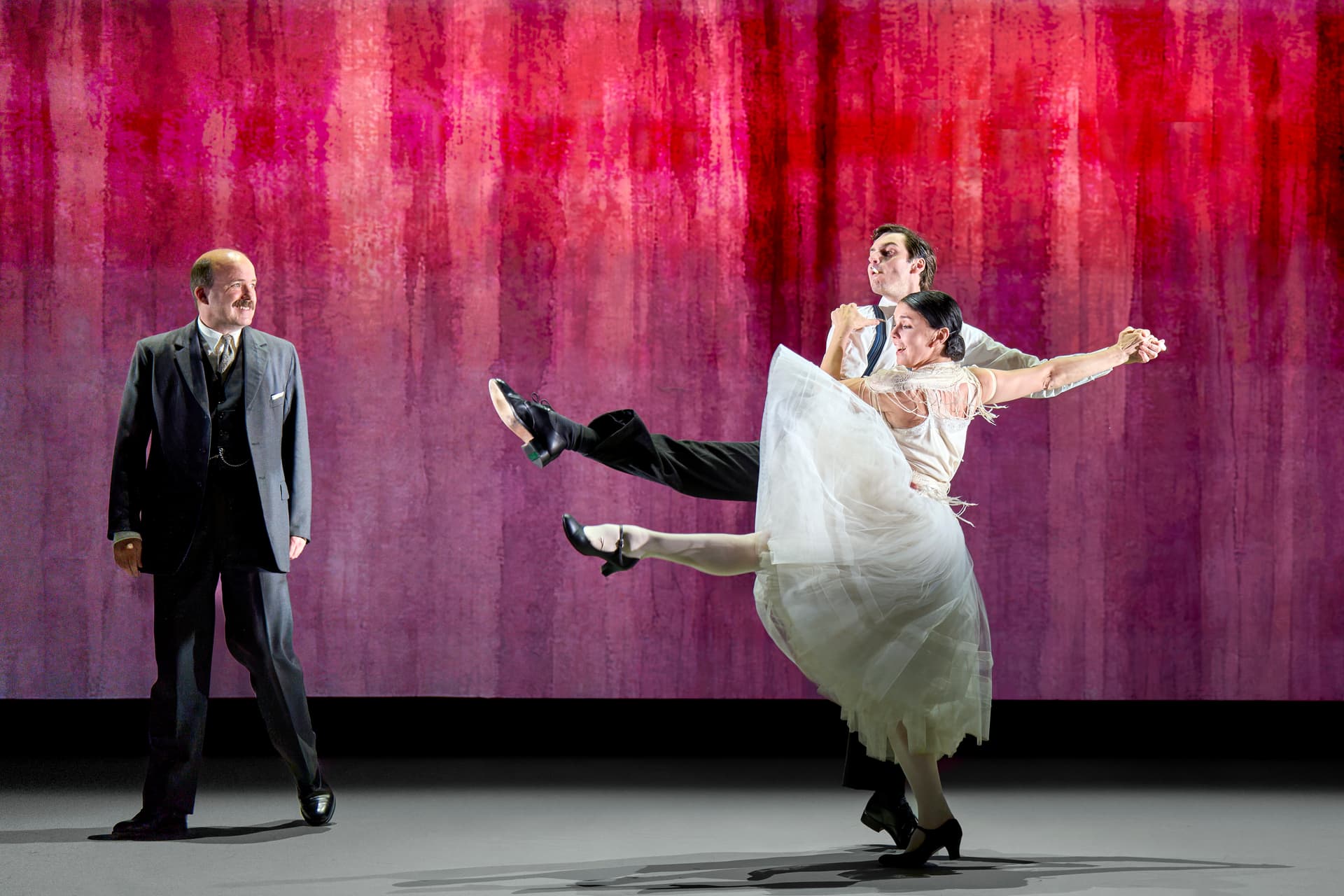
New York Film Festival Review: ‘Behemoth!’ Has Nine Composers and No Heart
By SEBASTIAN DOGGART
|One could be forgiven for thinking — in an autumnal mood, the crisp air redolent with fallen leaves, the shortened days of angled light — that fall is the only real subject of lyric poetry.

Fall is the subject of lyric poetry. One could be forgiven for thinking — in an autumnal mood, the crisp air redolent with fallen leaves, the shortened days of angled light — that fall is the only subject of lyric poetry: the only real subject, from whose melancholy of ending and metaphor of dying we cobble up spring poems of beginnings and birth in a vain attempt to convince ourselves that the world can be bright.
And so there’s Keats’s “To Autumn,” and Shakespeare’s Sonnet 73 (“That time of year thou mayst in me behold”), and Rossetti’s “Autumn Song,” and even James Whitcomb Riley’s “When the Frost is on the Punkin,” just to name poems we’ve featured in The New York Sun, along with Sara Teasdale’s “Dusk in Autumn,” James Thomson’s “Mists in Autumn,” Edna St, Vincent Millay’s “The Death of Autumn,” Scudder Middleton’s “Song in the Key of Autumn,” and others.
It’s in this line that today’s Poem of the Day fits: “Digging,” by Edward Thomas (1878–1917). Thomas was killed in France on Easter Monday near the end of World War I, and he has admirers who think him the best of the generation slaughtered in the Great War. But such poems as “The Owl,” “Adelstrop,” and “The Thrush” (all Poems of the Day in the Sun) are notable for not being about war — or, at least, not directly about war. They are nature poems whose poignancy is elevated by the soldier’s knowledge of what likely awaits him.
“Digging,” the first of two poems with that title, is a nature poem driven by fall’s scents: the odor of dead leaves, the waft from the earth overturned by a garden spade, the smoke of the dead growth cut away and burned in the fall. With a strange nonce meter — two-foot first lines, four-foot second and third lines, and three-foot fourth lines: stanzas of 2,4,4,3 beats — the poem’s four quatrains are rhymed on the second and fourth lines. And the calm resignation that transcends melancholy by acceptance of time is signaled by Thomas’s telling us that “It is enough.”
By SEBASTIAN DOGGART
|
By JOSEPH CURL
|
By GEORGE WILLIS
|
By HOLLIE McKAY
|
By DAVID JONES
|
By JOSEPH CURL
|
By THE NEW YORK SUN
|
By LAURA THOMPSON
|Fall is the subject of lyric poetry. One could be forgiven for thinking — in an autumnal mood, the crisp air redolent with fallen leaves, the shortened days of angled light — that fall is the only subject of lyric poetry: the only real subject, from whose melancholy of ending and metaphor of dying we cobble up spring poems of beginnings and birth in a vain attempt to convince ourselves that the world can be bright.
And so there’s Keats’s “To Autumn,” and Shakespeare’s Sonnet 73 (“That time of year thou mayst in me behold”), and Rossetti’s “Autumn Song,” and even James Whitcomb Riley’s “When the Frost is on the Punkin,” just to name poems we’ve featured in The New York Sun, along with Sara Teasdale’s “Dusk in Autumn,” James Thomson’s “Mists in Autumn,” Edna St, Vincent Millay’s “The Death of Autumn,” Scudder Middleton’s “Song in the Key of Autumn,” and others.
It’s in this line that today’s Poem of the Day fits: “Digging,” by Edward Thomas (1878–1917). Thomas was killed in France on Easter Monday near the end of World War I, and he has admirers who think him the best of the generation slaughtered in the Great War. But such poems as “The Owl,” “Adelstrop,” and “The Thrush” (all Poems of the Day in the Sun) are notable for not being about war — or, at least, not directly about war. They are nature poems whose poignancy is elevated by the soldier’s knowledge of what likely awaits him.
“Digging,” the first of two poems with that title, is a nature poem driven by fall’s scents: the odor of dead leaves, the waft from the earth overturned by a garden spade, the smoke of the dead growth cut away and burned in the fall. With a strange nonce meter — two-foot first lines, four-foot second and third lines, and three-foot fourth lines: stanzas of 2,4,4,3 beats — the poem’s four quatrains are rhymed on the second and fourth lines. And the calm resignation that transcends melancholy by acceptance of time is signaled by Thomas’s telling us that “It is enough.”
Already have a subscription? Sign in to continue reading
Cancel anytime
By continuing you agree to our Privacy Policy and Terms of Service.
Cancel anytime