


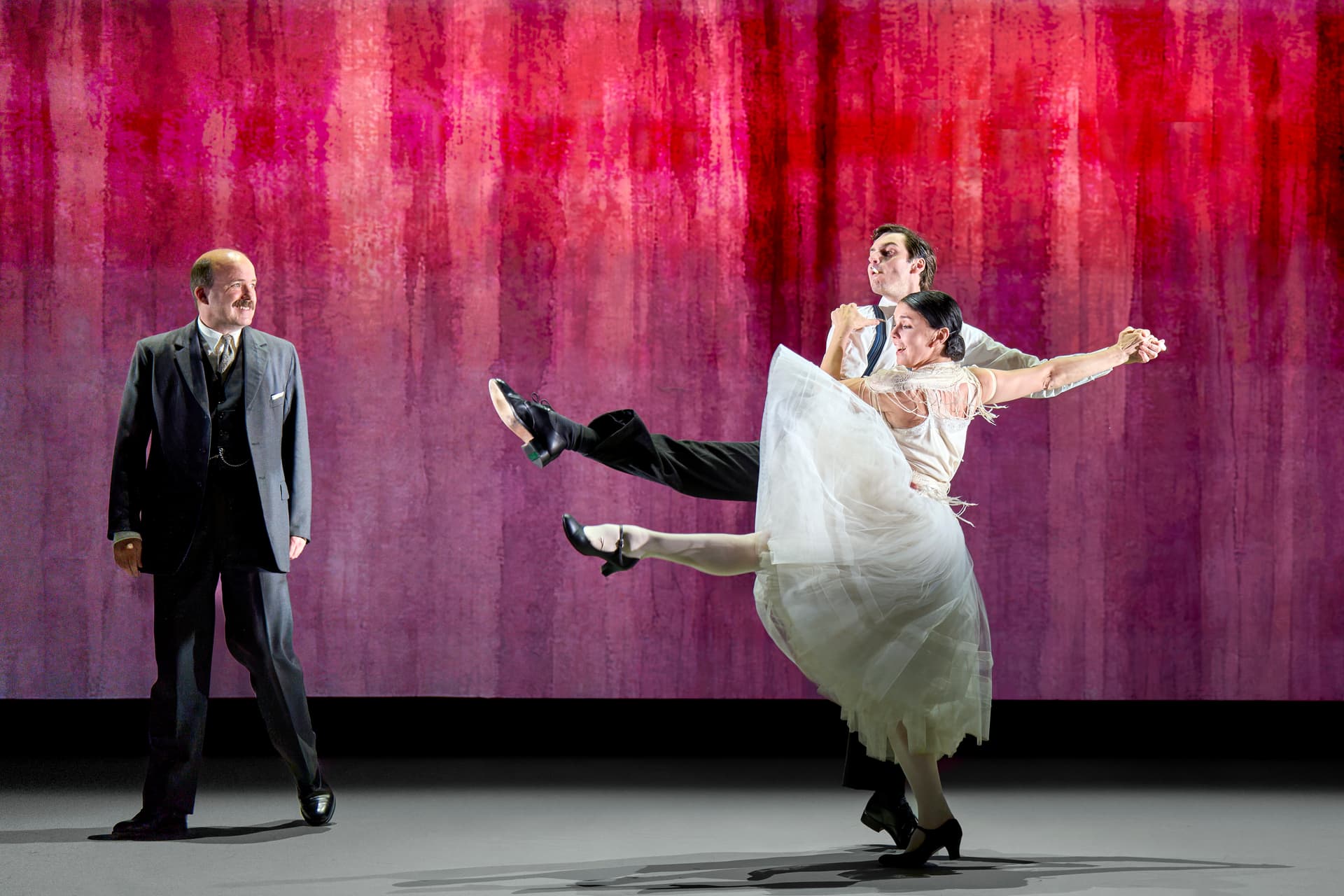
New York Film Festival Review: ‘Behemoth!’ Has Nine Composers and No Heart
By SEBASTIAN DOGGART
|Keats never names an emotion in the poem. Yet very little in literature conveys the season so exactly.

The most famous of poems about the fall is probably still Shakespeare’s “Sonnet 73”—the poem with the line “Bare ruin’d choirs, where late the sweet birds sang.” It appeared last week as The New York Sun’s Poem of the Day. But quick on Shakespeare’s heels comes “To Autumn,” the last of the astonishing run of odes John Keats (1795–1821) wrote in 1819. Keats has appeared twice this year in the Sun’s Poem of the Day feature, with “What the Thrush Said” in March and “On the Sonnet” in June. But here, deep in the fall, it seemed impossible to leave out the poem that begins “Season of mists and mellow fruitfulness.” Besides, today, October 31, is also Keats’s birthday.
The eleven-line pentameter stanzas are rhymed ababcdedcce in the first verse, and ababcdecdde in the second and third, but all with an opening quatrain and a couplet before the final line. Keats never names an emotion in the poem, but the effect of the scenes he describes — the apple trees bending beneath their weight, the last juice oozing from a cider press, the swallows in the sky — is devastatingly precise. Very little in literature conveys the season so exactly. “Where are the songs of spring? Ay, Where are they? / Think not of them, thou hast thy music too.”
By SEBASTIAN DOGGART
|
By JOSEPH CURL
|
By GEORGE WILLIS
|
By HOLLIE McKAY
|
By DAVID JONES
|
By JOSEPH CURL
|
By THE NEW YORK SUN
|
By LAURA THOMPSON
|The most famous of poems about the fall is probably still Shakespeare’s “Sonnet 73”—the poem with the line “Bare ruin’d choirs, where late the sweet birds sang.” It appeared last week as The New York Sun’s Poem of the Day. But quick on Shakespeare’s heels comes “To Autumn,” the last of the astonishing run of odes John Keats (1795–1821) wrote in 1819. Keats has appeared twice this year in the Sun’s Poem of the Day feature, with “What the Thrush Said” in March and “On the Sonnet” in June. But here, deep in the fall, it seemed impossible to leave out the poem that begins “Season of mists and mellow fruitfulness.” Besides, today, October 31, is also Keats’s birthday.
The eleven-line pentameter stanzas are rhymed ababcdedcce in the first verse, and ababcdecdde in the second and third, but all with an opening quatrain and a couplet before the final line. Keats never names an emotion in the poem, but the effect of the scenes he describes — the apple trees bending beneath their weight, the last juice oozing from a cider press, the swallows in the sky — is devastatingly precise. Very little in literature conveys the season so exactly. “Where are the songs of spring? Ay, Where are they? / Think not of them, thou hast thy music too.”
Cancel anytime
By continuing you agree to our Privacy Policy and Terms of Service.
Cancel anytime