


Shane Gillis’s Crass ‘SNL’ Monologue Told Uncomfortable Truths About Gym Decency and Decorum
By CAROLINE DOWNEY
|This nearly perfect work, a stately and sane poem in the pentameter of modern blank verse, concerns the personal: How shall we age? How shall we die? By seeking one last great thing, Tennyson’s Ulysses declares.
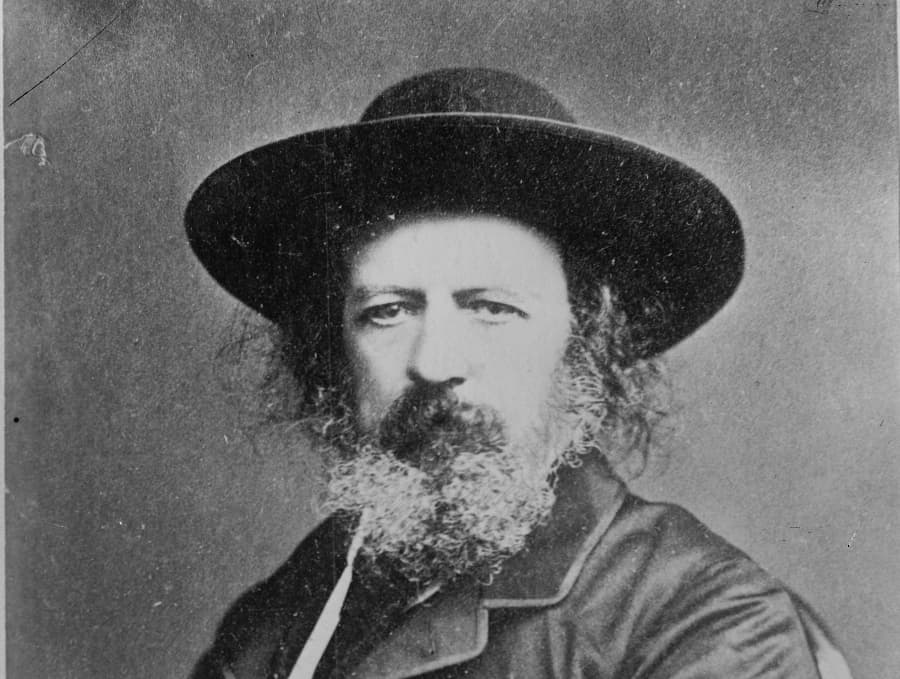
Asked who was the greatest French poet of the 19th century, André Gide cruelly replied, “Victor Hugo, alas!” We might be tempted to say something similar of English poetry: “Tennyson, alas!” Whitman still produces devotees, Dickinson her coterie. Browning has few followers left, but Hopkins can still inspire. And then there’s Alfred, Lord Tennyson (1809–1892).
The more one knows of poetry, the higher the unwilling estimation of Tennyson rises. The more one sands away the edges to expose the core of 19th-century literature, the more one discerns Tennyson’s features. Like or dislike him, he towers: stately, sane, and metrically brilliant. Take, for example, “Ulysses,” today’s Poem of the Day. Bobby Kennedy loved “Come, my friends, / ’T is not too late to seek a newer world” for what he took as the lines’ aspirational liberalism. But something near the center of conservatism is also revealed when Tennyson writes, “Tho’ much is taken, much abides; and tho’ / We are not now that strength which in old days / Moved earth and heaven, that which we are, we are.” Mostly, though, this nearly perfect work, a stately and sane poem in the pentameter of modern blank verse, concerns the personal: How shall we age? How shall we die? By seeking one last great thing, Tennyson’s Ulysses declares. One last great striving in the final strength of old age.
By CAROLINE DOWNEY
|
By ALEX ZDAN
|
By JOSEPH CURL
|
By TOM DEIGNAN
|
By JENNIFER DOHERTY
|
By LUKE FUNK
|
By THE NEW YORK SUN
|
By MATTHEW RICE
|Asked who was the greatest French poet of the 19th century, André Gide cruelly replied, “Victor Hugo, alas!” We might be tempted to say something similar of English poetry: “Tennyson, alas!” Whitman still produces devotees, Dickinson her coterie. Browning has few followers left, but Hopkins can still inspire. And then there’s Alfred, Lord Tennyson (1809–1892).
The more one knows of poetry, the higher the unwilling estimation of Tennyson rises. The more one sands away the edges to expose the core of 19th-century literature, the more one discerns Tennyson’s features. Like or dislike him, he towers: stately, sane, and metrically brilliant. Take, for example, “Ulysses,” today’s Poem of the Day. Bobby Kennedy loved “Come, my friends, / ’T is not too late to seek a newer world” for what he took as the lines’ aspirational liberalism. But something near the center of conservatism is also revealed when Tennyson writes, “Tho’ much is taken, much abides; and tho’ / We are not now that strength which in old days / Moved earth and heaven, that which we are, we are.” Mostly, though, this nearly perfect work, a stately and sane poem in the pentameter of modern blank verse, concerns the personal: How shall we age? How shall we die? By seeking one last great thing, Tennyson’s Ulysses declares. One last great striving in the final strength of old age.
Cancel anytime
By continuing you agree to our Privacy Policy and Terms of Service.
Cancel anytime